
Tyrannosaurus on a Sandy Coastal Cliff
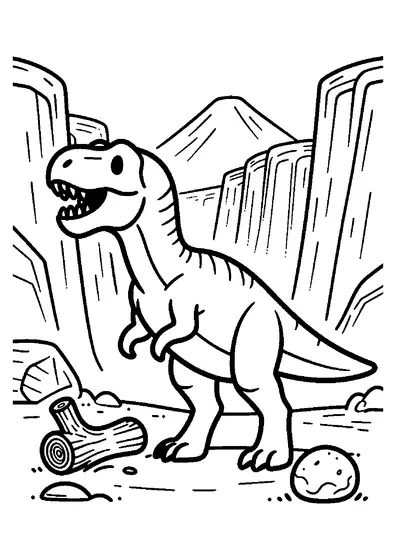
A formidable Tyrannosaurus overlooks the ocean from a sandy cliff with an active volcano looming in the distance.

A4 format (landscape), black outlines on a white background · for home and classroom use
All coloring pages: Predatory Dinosaur Coloring Pages
Similar coloring pages: Predatory Dinosaur Coloring Pages



What else can you print? Free, no account needed
Custom Name Coloring Pages
Enter your child's name to generate a custom coloring page featuring large outline letters to color and decorate.
Open generator →Connect the Dots Generator
Eight connect-the-dots pictures across three difficulty levels. Features faint outline guides for younger children and dots only for older kids.
Open generator →Printables
Worksheets, tracing lines, mazes and dot-to-dots in A4.
Browse printables →
Tyrannosaurus Standing Along the Coastal Cliffs
The Tyrannosaurus remains one of the largest land predators in Earth's history, dominating North American ecosystems near the end of the Cretaceous period. Positioned along a sandy coastal precipice, the dinosaur observes a shoreline bordered by marine waters. Coastal regions often provided rich hunting territories where land animals collided with aquatic habitats. In the distance, a volcanic peak highlights the dynamic geology of prehistoric coastlines.
Unique Facts About Tyrannosaurus Habitat
Coastal plains and estuaries provided vital water sources and lush vegetation that attracted large herbivorous dinosaurs, which in turn drew apex predators like Tyrannosaurus. Volcanoes were frequently active during the Late Cretaceous, constantly shaping the landscape with ash and mineral-rich soils. Studies show that Tyrannosaurus possessed an exceptional sense of smell and powerful binocular vision suited for open terrain.
Realistic Shades of Tyrannosaurus and Coastal Scenery
- Tyrannosaurus hide: mottled brown, sandy tan, or dark forest green shades
- Ocean water: deep turquoise, cobalt blue, or seafoam green
- Sandy cliff face: warm beige, ochre, and pale golden earth tones
- Volcanic peak: charcoal gray rock with hints of rusty red ash deposits