
Ceratosaurus with a Horn on Its Nose
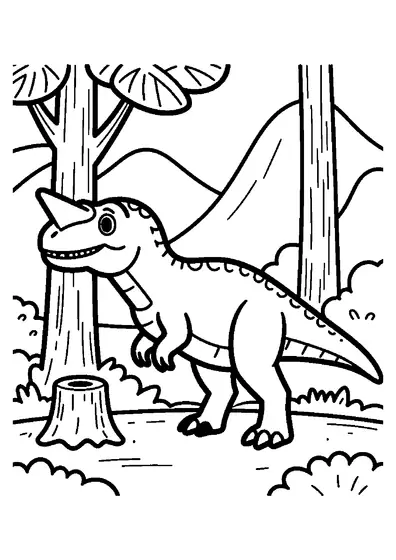
A large Ceratosaurus with a single prominent nose horn features as the central subject of this prehistoric dinosaur scene.

A4 format (landscape), black outlines on a white background · for home and classroom use
All coloring pages: Predatory Dinosaur Coloring Pages
Similar coloring pages: Predatory Dinosaur Coloring Pages


What else can you print? Free, no account needed
Custom Name Coloring Pages
Enter your child's name to generate a custom coloring page featuring large outline letters to color and decorate.
Open generator →Connect the Dots Generator
Eight connect-the-dots pictures across three difficulty levels. Features faint outline guides for younger children and dots only for older kids.
Open generator →Printables
Worksheets, tracing lines, mazes and dot-to-dots in A4.
Browse printables →
Ceratosaurus in Profile
The illustration shows a standalone cartoon-style Ceratosaurus viewed from the side. This theropod dinosaur stands on two strong hind legs, showcasing its raised back, long trailing tail, and the distinctive horn positioned right above its snout.
Horned Hunter of the Jurassic
Unlike many other large theropods, Ceratosaurus possessed a distinct crest-like horn on its nasal bones that was likely used for display among rivals rather than defense. It lived alongside larger predators like Allosaurus, relying on its flexible body and sharp teeth to hunt near waterways.
Natural Colors of Ceratosaurus
- Skin and scales: Mottled olive green or brownish gray
- Back ridges: Dark brown or black
- Nose horn: Muted red or yellowish cream
- Eyes: Amber or dark brown
- Underbelly: Pale beige