
Allosaurus Looking to the Side
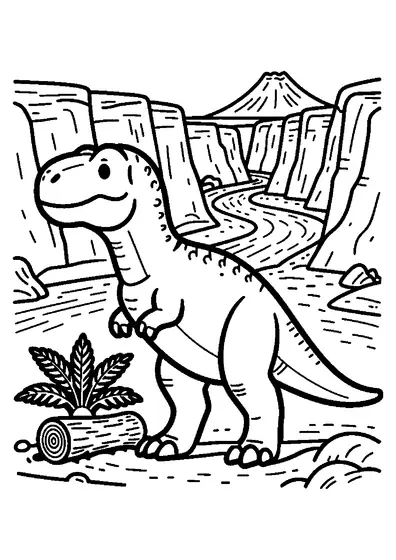
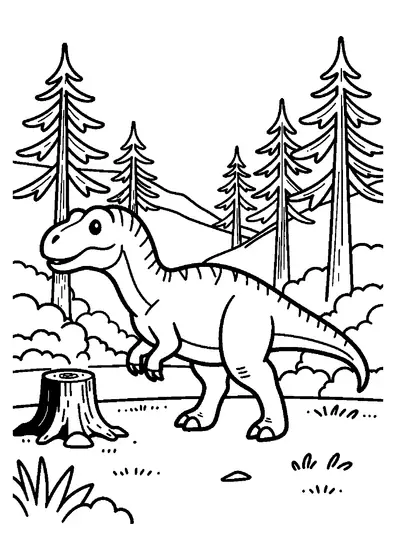
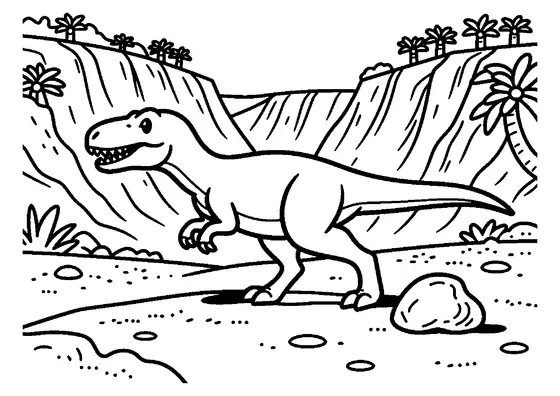
A large Allosaurus stands in a still posture, turning its head to look angled toward the side.

A4 format (portrait), black outlines on a white background · for home and classroom use
All coloring pages: Predatory Dinosaur Coloring Pages
Similar coloring pages: Predatory Dinosaur Coloring Pages



What else can you print? Free, no account needed
Custom Name Coloring Pages
Enter your child's name to generate a custom coloring page featuring large outline letters to color and decorate.
Open generator →Connect the Dots Generator
Eight connect-the-dots pictures across three difficulty levels. Features faint outline guides for younger children and dots only for older kids.
Open generator →Printables
Worksheets, tracing lines, mazes and dot-to-dots in A4.
Browse printables →
An Allosaurus Turned to the Side
The illustration portrays an Allosaurus standing quietly while angled slightly toward the viewer. Small crest-like horns sit right above its eyes on a long, powerful skull. Its muscular neck, sturdy three-clawed hands, and heavy tail give the predator a balanced stance.
Life of the Dominant Jurassic Predator
Allosaurus was the top predator of North America millions of years before Tyrannosaurus appeared on Earth. Its jaw joints allowed the skull to expand sideways, enabling it to swallow large chunks of meat efficiently. Paleontologists have uncovered hundreds of Allosaurus bones in Utah, making it one of the best-understood meat-eating dinosaurs.
Authentic Colors of Jurassic Theropods
- Upper hide and back: Dark forest green, charcoal gray, or deep brown
- Head crests above eyes: Accent colors such as dull red, burnt orange, or yellow
- Belly and jaw underside: Pale buff, tan, or off-white
- Claws: Dark gray or matte black