
Majungasaurus by a Lone Sulfur Geyser
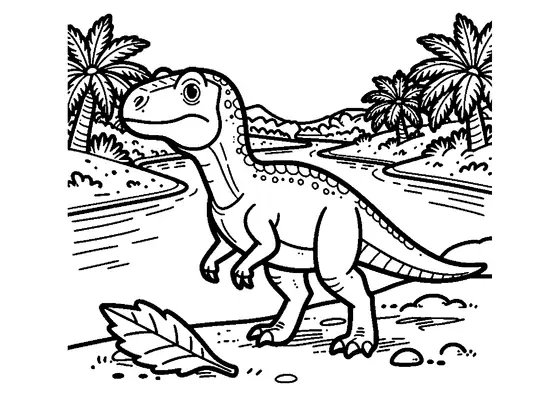
A short-snouted, horned Majungasaurus stands near steaming hot springs and an erupting sulfur geyser.

A4 format (landscape), black outlines on a white background · for home and classroom use
All coloring pages: Dinosaur Coloring Pages
Similar coloring pages: Dinosaur Coloring Pages



What else can you print? Free, no account needed
Custom Name Coloring Pages
Enter your child's name to generate a custom coloring page featuring large outline letters to color and decorate.
Open generator →Connect the Dots Generator
Eight connect-the-dots pictures across three difficulty levels. Features faint outline guides for younger children and dots only for older kids.
Open generator →Printables
Worksheets, tracing lines, mazes and dot-to-dots in A4.
Browse printables →
Majungasaurus in a geothermal landscape
The page features Majungasaurus beside an active geyser near steaming hot springs. Its short, deep snout and horned head distinguish this predator against the geothermal setting. The scene is limited to the dinosaur, the geyser, and the hot-spring environment described by the page information.
Unusual facts about Majungasaurus
Majungasaurus lived on prehistoric Madagascar during the Late Cretaceous, when the island already had a distinctive animal community. It belonged to the abelisaurids, predators known for deep skulls and extremely reduced forelimbs. Geysers erupt when underground water is heated, trapped under pressure, and forced upward through openings in rock.
Realistic colors for Majungasaurus and hot springs
- Majungasaurus skin: its actual coloration is unknown; muted tan, brown, rust, or gray are plausible options
- Head horn: earthy brown, gray, or darker than the surrounding skin
- Teeth: ivory or warm cream
- Geyser water and steam: clear water with white or pale gray steam
- Sulfur deposits: yellow, golden yellow, or yellow-orange