
Psittacosaurus with a Parrot-Like Beak
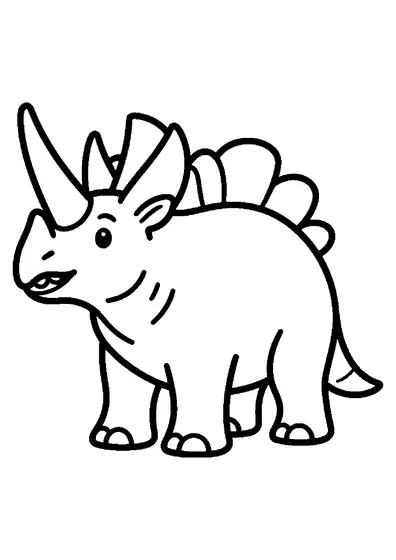
A small bipedal dinosaur features a deep parrot-like beak, short forelimbs, and an elongated tail viewed from the side.

A4 format (portrait), black outlines on a white background · for home and classroom use
All coloring pages: Herbivorous Dinosaur Coloring Pages
Similar coloring pages: Herbivorous Dinosaur Coloring Pages




What else can you print? Free, no account needed
Custom Name Coloring Pages
Enter your child's name to generate a custom coloring page featuring large outline letters to color and decorate.
Open generator →Connect the Dots Generator
Eight connect-the-dots pictures across three difficulty levels. Features faint outline guides for younger children and dots only for older kids.
Open generator →Printables
Worksheets, tracing lines, mazes and dot-to-dots in A4.
Browse printables →
A Bipedal Creature with a Distinct Beak Structure
This compact herbivorous dinosaur stands on two legs, showing a narrow head with a pronounced parrot beak, short front arms, and an extended tail.
Fascinating Facts About Psittacosaurus
Psittacosaurus is one of the most complete dinosaur species known, with hundreds of fossil specimens discovered across Asia. Exceptional fossil preservation revealed that it possessed bristle-like structures along the top of its tail.
Natural Colors of Psittacosaurus
- Upper body skin: reddish brown or brownish orange tones
- Underbelly hide: pale cream or light yellowish tan
- Parrot beak: dark slate gray or horn brown
- Tail bristles: dark brown or black hair-like quills