
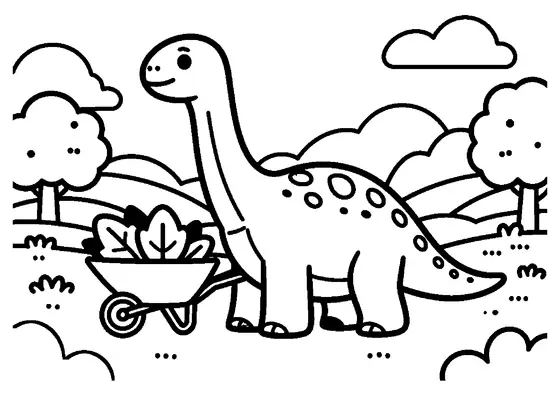
Protoceratops with a Wooden Cart
A small protoceratops stands alongside a sturdy wooden wagon on a wide open meadow.

A4 format (landscape), black outlines on a white background · for home and classroom use
All coloring pages: Herbivorous Dinosaur Coloring Pages
Similar coloring pages: Herbivorous Dinosaur Coloring Pages



What else can you print? Free, no account needed
Custom Name Coloring Pages
Enter your child's name to generate a custom coloring page featuring large outline letters to color and decorate.
Open generator →Connect the Dots Generator
Eight connect-the-dots pictures across three difficulty levels. Features faint outline guides for younger children and dots only for older kids.
Open generator →Printables
Worksheets, tracing lines, mazes and dot-to-dots in A4.
Browse printables →
Protoceratops Beside a Wooden Wagon
This scene depicts a protoceratops standing next to a large wooden cart equipped with wide wheels. The surrounding meadow provides an open backdrop for this heavy-bodied herbivore.
Early Horned Dinosaurs of Ancient Deserts
Protoceratops was a relatively small herbivore that inhabited arid landscapes and floodplains of North America and Asia. Unlike its later relative Triceratops, Protoceratops lacked large brow horns, relying instead on a broad neck frill to protect its neck and display signals to others.
Natural Colors of Protoceratops and Wooden Wagons
- Protoceratops hide: Sandy beige, dusty brown, or mottled tan hues matching dry environments
- Neck frill display: Earthy terracotta or soft ochre pattern
- Wagon wooden planks: Natural oak brown, dark walnut, or weathered gray timber
- Wagon wheels: Dark iron gray or natural wood grain tones