
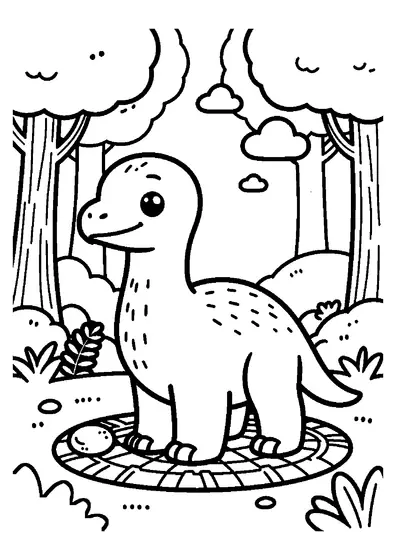
Maiasaura Guarding a Basket of Leaves
A young maiasaura sits resting beside a basket of broad leaves amidst rolling hills and tall trees.

A4 format (portrait), black outlines on a white background · for home and classroom use
All coloring pages: Herbivorous Dinosaur Coloring Pages
Similar coloring pages: Herbivorous Dinosaur Coloring Pages




What else can you print? Free, no account needed
Custom Name Coloring Pages
Enter your child's name to generate a custom coloring page featuring large outline letters to color and decorate.
Open generator →Connect the Dots Generator
Eight connect-the-dots pictures across three difficulty levels. Features faint outline guides for younger children and dots only for older kids.
Open generator →Printables
Worksheets, tracing lines, mazes and dot-to-dots in A4.
Browse printables →
Maiasaura Sitting Near a Basket of Greenery
This page depicts a young maiasaura resting next to a basket filled with broad plant leaves. Rolling hills, greenery, and tall trees form the scenery around the herbivore.
The Caring Lizard of Prehistoric Nesting Grounds
Maiasaura is famous for being the first dinosaur with clear evidence of caring for its young at nesting sites. Fossil herds discovered together show that parent Maiasaura brought fresh vegetation back to communal nests to feed hatchlings that were too small to travel.
Authentic Colors of Maiasaura and Woodland Foliage
- Maiasaura skin: Muted olive green, grayish-brown, or dark forest shades
- Broad plant leaves: Vivid emerald green, lime, and rich mossy hues
- Woven basket material: Straw yellow, dry tan, or light brown fiber shades
- Tree canopy and hills: Deep pine green, soft sage, and earthy landscape colors