
Saltasaurus with a Wheelbarrow of Plants
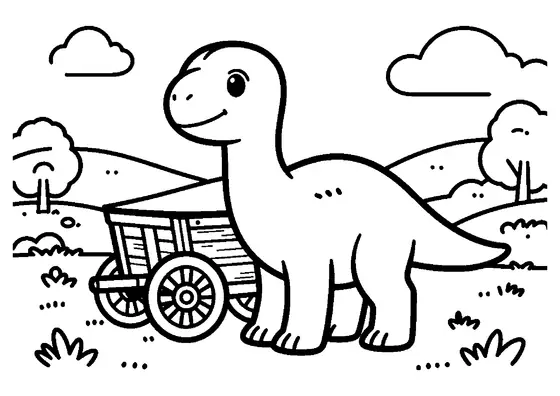
An open meadow setting depicts a gentle Saltasaurus near a wheelbarrow filled with leaves alongside simple trees.

A4 format (landscape), black outlines on a white background · for home and classroom use
All coloring pages: Herbivorous Dinosaur Coloring Pages
Similar coloring pages: Herbivorous Dinosaur Coloring Pages


What else can you print? Free, no account needed
Custom Name Coloring Pages
Enter your child's name to generate a custom coloring page featuring large outline letters to color and decorate.
Open generator →Connect the Dots Generator
Eight connect-the-dots pictures across three difficulty levels. Features faint outline guides for younger children and dots only for older kids.
Open generator →Printables
Worksheets, tracing lines, mazes and dot-to-dots in A4.
Browse printables →
Saltasaurus in an Open Meadow with Leaves
The scene presents a Saltasaurus situated in a broad meadow with simple trees and a wheelbarrow loaded with freshly gathered leaves. The long-necked dinosaur stands outdoors in a calm, open environment surrounded by grassy terrain and foliage.
The Armor and Diet of Saltasaurus
Saltasaurus was one of the first sauropods discovered to possess armor plates called osteoderms embedded directly into its skin for defense against predators. Despite reaching lengths of over thirty feet, Saltasaurus was relatively small compared to giant sauropods like Argentinosaurus. Wheelbarrows were invented in ancient times as single-wheeled tools to move heavy loads of soil and cut plants with minimal effort.
Realistic Colors for Saltasaurus and Outdoor Scenery
- Saltasaurus skin: dusty gray, olive green, or earthy brown
- Bony armor plates: lighter stone gray or yellowish tan
- Collected leaves: vibrant green, pale yellow, or autumn orange
- Wheelbarrow frame: muted red, dark gray, or natural wood tone
- Meadow grass: lime green, field green, or soft yellow-green