
Polacanthus by a Plant
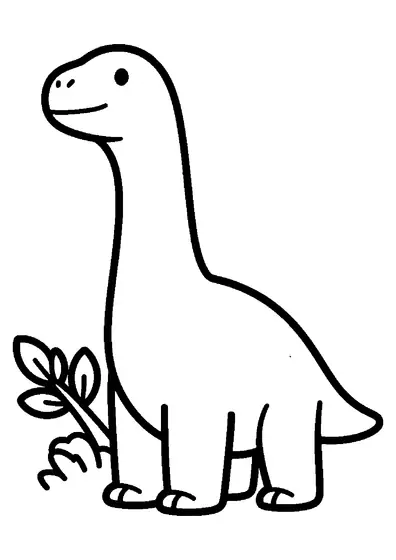
A spiky Polacanthus stands beside a low broad-leaf plant in an early Cretaceous habitat.

A4 format (landscape), black outlines on a white background · for home and classroom use
All coloring pages: Herbivorous Dinosaur Coloring Pages
Similar coloring pages: Herbivorous Dinosaur Coloring Pages



What else can you print? Free, no account needed
Custom Name Coloring Pages
Enter your child's name to generate a custom coloring page featuring large outline letters to color and decorate.
Open generator →Connect the Dots Generator
Eight connect-the-dots pictures across three difficulty levels. Features faint outline guides for younger children and dots only for older kids.
Open generator →Printables
Worksheets, tracing lines, mazes and dot-to-dots in A4.
Browse printables →
Anatomy of Polacanthus
Polacanthus was a heavily built herbivore featuring rows of sharp lateral spikes and a robust muscular tail. A low broad-leafed plant represents the coastal and woodland foliage common in its ancient European habitat.
Sacral Shield and Spikes
A unique anatomical feature of Polacanthus was a continuous fused shield of bony armor covering its hips, known as a sacral shield. Sharp spikes protruding along its flanks discouraged predators from attacking its sides.
Authentic Colors of Polacanthus
- Side spikes: pale bone horn color or off-white
- Heavy hip shield: dark brownish gray
- Body skin: dusty bronze or dark olive
- Tail muscles and scales: medium brown
- Broad-leaf plant: vibrant green or yellow-green