
Nigersaurus with a Bundle of Ferns
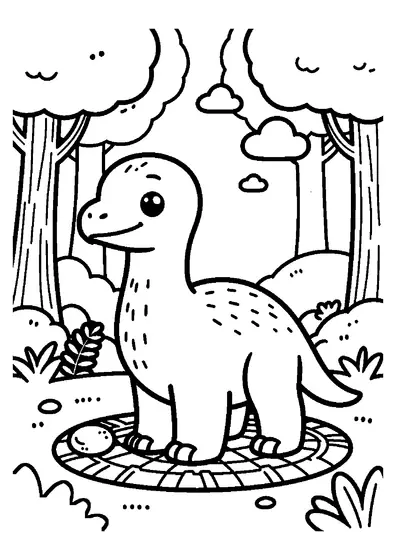
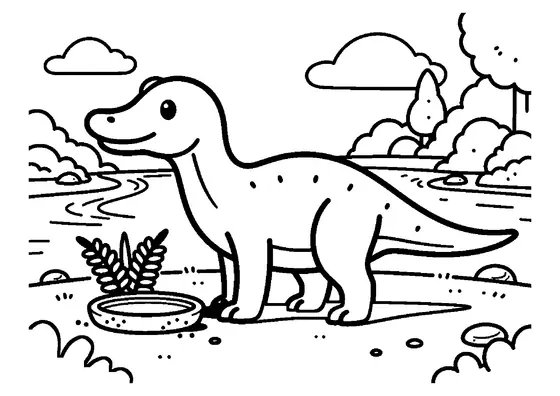
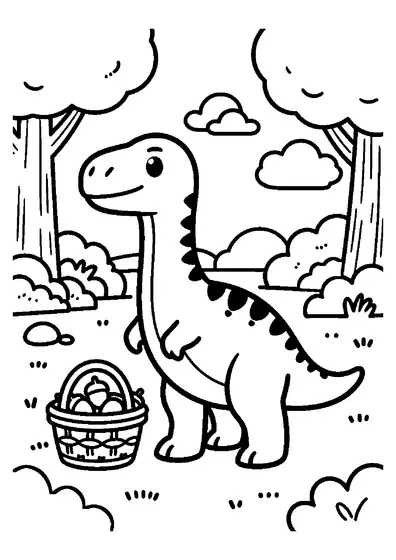
A young Nigersaurus stands in an open grassy meadow next to a large gathered bundle of wide fern leaves.

A4 format (landscape), black outlines on a white background · for home and classroom use
All coloring pages: Herbivorous Dinosaur Coloring Pages
Similar coloring pages: Herbivorous Dinosaur Coloring Pages



What else can you print? Free, no account needed
Custom Name Coloring Pages
Enter your child's name to generate a custom coloring page featuring large outline letters to color and decorate.
Open generator →Connect the Dots Generator
Eight connect-the-dots pictures across three difficulty levels. Features faint outline guides for younger children and dots only for older kids.
Open generator →Printables
Worksheets, tracing lines, mazes and dot-to-dots in A4.
Browse printables →
The Herbivorous Nigersaurus in a Prehistoric Meadow
A young Nigersaurus stands happily in a sunny meadow beside a broad pile of harvested fern leaves. The open environment highlights the grazing lifestyle of this unique plant-eating dinosaur.
Anatomical Wonders of Nigersaurus
Nigersaurus was a sauropod dinosaur that inhabited floodplains in West Africa during the Cretaceous period. It is famous for its straight, wide muzzle packed with hundreds of tiny teeth that replaced themselves continuously. Because its neck naturally angled downward toward the ground, Nigersaurus functioned much like a prehistoric grazer, specialized in cropping low-growing vegetation.
Natural Colors of Prehistoric Flora and Dinosaurs
- Nigersaurus skin: Soft grayish-green, earthy brown, or dusty tan
- Nigersaurus muzzle and beak: Pale beige, horn brown, or dark taupe
- Broad fern leaves: Lush forest green, bright lime green, or deep emerald
- Fern leaf stems: Pale yellow-green, brownish-tan, or olive
- Meadow ground foliage: Golden wheat yellow, pale chartreuse, or mossy green