
Leptoceratops with a Large Gourd
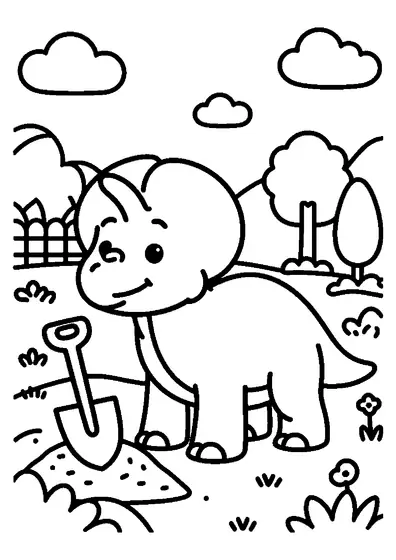
This sheet features a small hornless ceratopsian dinosaur standing next to a round gourd in a fenced garden plot.

A4 format (landscape), black outlines on a white background · for home and classroom use
All coloring pages: Herbivorous Dinosaur Coloring Pages
Similar coloring pages: Herbivorous Dinosaur Coloring Pages



What else can you print? Free, no account needed
Custom Name Coloring Pages
Enter your child's name to generate a custom coloring page featuring large outline letters to color and decorate.
Open generator →Connect the Dots Generator
Eight connect-the-dots pictures across three difficulty levels. Features faint outline guides for younger children and dots only for older kids.
Open generator →Printables
Worksheets, tracing lines, mazes and dot-to-dots in A4.
Browse printables →
Leptoceratops in a Prehistoric Garden
A quiet garden setting surrounds a Leptoceratops as it stands beside a large growing gourd. Straight garden beds line the ground while a simple wooden fence frames the background of the scene.
Fascinating Facts About Leptoceratops
Unlike its larger relatives like Triceratops, Leptoceratops was a relatively small herbivore that walked mainly on four legs but could stand on two legs to reach low branches. It lived during the Late Cretaceous period in North America, foraging among fern thickets and early flowering plants. Its strong jaws were equipped with specialized teeth suited for shearing tough plant fibers like cycads.
Real Colors of Leptoceratops and Plants
- Leptoceratops hide: sandy brown or olive green for camouflage among low brush
- Gourd skin: deep orange, mottled green, or pale yellow
- Wooden fence: weathered gray or earthy brown
- Soil in garden beds: rich dark brown
- Garden foliage: muted sage green or bright leaf green