
Iguanodon Follows a Trail
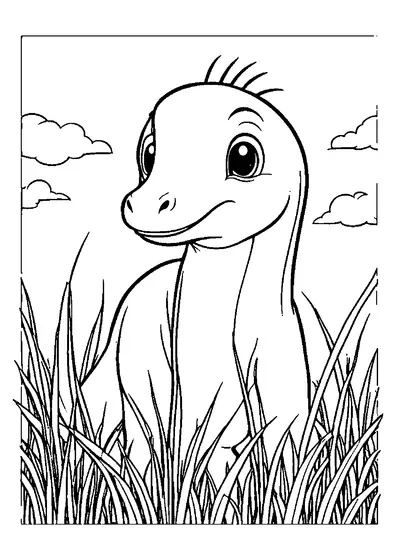
An Iguanodon follows a trail through a prehistoric valley beneath the sun, clouds, and distant mountains.

A4 format (landscape), black outlines on a white background · for home and classroom use
All coloring pages: Herbivorous Dinosaur Coloring Pages
Similar coloring pages: Herbivorous Dinosaur Coloring Pages


What else can you print? Free, no account needed
Custom Name Coloring Pages
Enter your child's name to generate a custom coloring page featuring large outline letters to color and decorate.
Open generator →Connect the Dots Generator
Eight connect-the-dots pictures across three difficulty levels. Features faint outline guides for younger children and dots only for older kids.
Open generator →Printables
Worksheets, tracing lines, mazes and dot-to-dots in A4.
Browse printables →
Exploring the Iguanodon trail
The Iguanodon walks in side view through a valley bordered by palms, grasses, hills, and mountains. Clouds cross the sky, and the sun shines from the upper-right corner. The path leads through the landscape, giving the scene a clear sense of travel and discovery.
Facts about following ancient tracks
Fossil footprints reveal details that bones alone cannot, including walking direction, stride, and speed. A sequence of tracks may show whether a dinosaur moved alone or near others, although scientists must interpret incomplete trails carefully. Iguanodon could probably move on either two legs or four, depending on its activity.
Real-world color ideas
- Iguanodon skin: its precise color is unknown; brown, olive, green, or gray are scientifically cautious choices
- Palms and grasses: commonly green, with brown or tan trunks and dry growth
- Mountains and hills: gray, brown, green, or blue in the distance
- Clouds: white, cream, or pale gray
- Sun: white to warm yellow as it appears through Earth's atmosphere