
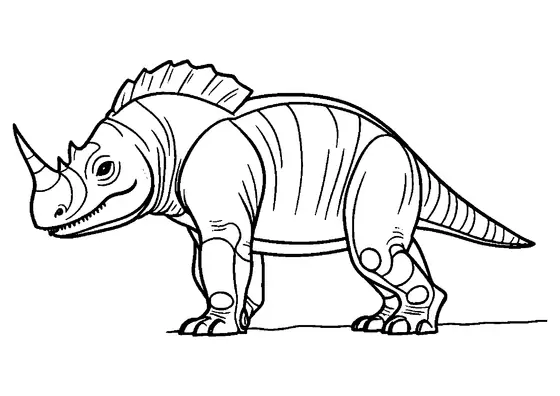
Stegosaurus with Plates Along Its Back
A Stegosaurus stands in left-facing profile, with a row of tall triangular plates rising along its back.

A4 format (landscape), black outlines on a white background · for home and classroom use
All coloring pages: Herbivorous Dinosaur Coloring Pages
Similar coloring pages: Herbivorous Dinosaur Coloring Pages


What else can you print? Free, no account needed
Custom Name Coloring Pages
Enter your child's name to generate a custom coloring page featuring large outline letters to color and decorate.
Open generator →Connect the Dots Generator
Eight connect-the-dots pictures across three difficulty levels. Features faint outline guides for younger children and dots only for older kids.
Open generator →Printables
Worksheets, tracing lines, mazes and dot-to-dots in A4.
Browse printables →
Stegosaurus and its distinctive back plates
The dinosaur is shown alone at the center, standing on four legs and facing left. A series of large triangular plates runs from the neck toward the tail, creating its most recognizable feature. No plants, rocks, or other animals appear around it.
Plates with more than one possible purpose
Scientists have proposed that Stegosaurus plates helped members of the species recognize one another or display maturity and health. The plates contained channels for blood vessels, although their exact role in controlling body temperature remains uncertain. The tail spikes, rather than the back plates, were likely the animal’s more effective active defense.
Plausible real-world colors for Stegosaurus
- Main body: the exact color is unknown, but muted olive, earthy brown, or gray-brown is plausible
- Back plates: rust red, dark brown, ocher, or a stronger shade that contrasts with the body
- Belly and inner legs: pale tan, beige, or light gray
- Eyes: dark brown or black
- Claws: dull ivory, gray, or brown