
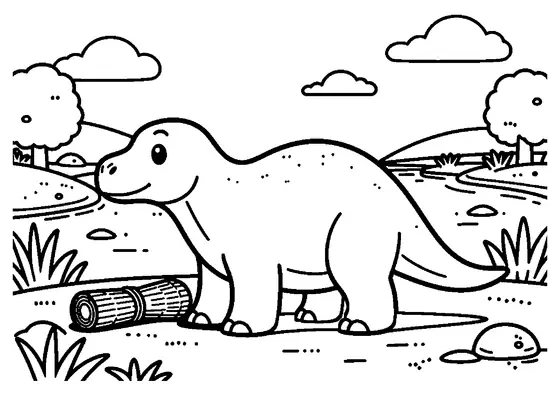
Gryposaurus Beside a Wooden Bowl
A duck-billed Gryposaurus rests near a broad wooden vessel along a calm riverbank surrounded by open meadowlands.

A4 format (landscape), black outlines on a white background · for home and classroom use
All coloring pages: Herbivorous Dinosaur Coloring Pages
Similar coloring pages: Herbivorous Dinosaur Coloring Pages



What else can you print? Free, no account needed
Custom Name Coloring Pages
Enter your child's name to generate a custom coloring page featuring large outline letters to color and decorate.
Open generator →Connect the Dots Generator
Eight connect-the-dots pictures across three difficulty levels. Features faint outline guides for younger children and dots only for older kids.
Open generator →Printables
Worksheets, tracing lines, mazes and dot-to-dots in A4.
Browse printables →
Hook-Nosed Dinosaur by the River
This herbivorous dinosaur stands fully visible alongside a broad container made of wood, situated within a quiet river meadow setting.
Fascinating Facts About Gryposaurus
Gryposaurus lived during the Late Cretaceous period in areas that are now part of North America. Its distinctive arched nasal ridge helped identify fossil skeletons discovered in ancient floodplain sediments. Fossil specimens show that this duck-billed dinosaur reached lengths of up to thirty feet.
Natural Colors of Gryposaurus and Its Environment
- Scaly hide: shades of dull green or olive brown for camouflage near riverbanks
- Arched nose crest: darker gray or patterned skin used for species recognition
- Wooden vessel: warm timber tones ranging from light tan to deep brown
- River meadow grass: fresh green foliage and damp brown soil tones