
Oviraptor Under a Sunny Cloud
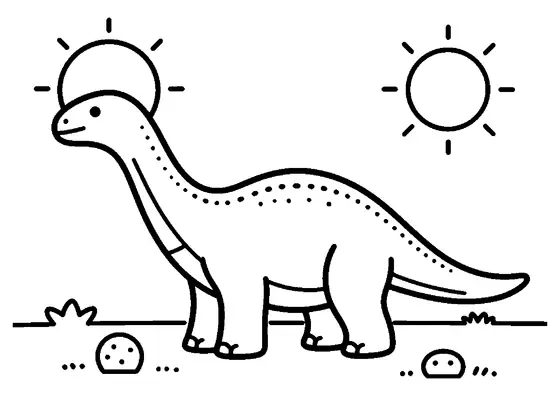
A crested dinosaur stands under a bright sun beneath a passing cloud.

A4 format (portrait), black outlines on a white background · for home and classroom use
All coloring pages: Herbivorous Dinosaur Coloring Pages
Similar coloring pages: Herbivorous Dinosaur Coloring Pages




What else can you print? Free, no account needed
Custom Name Coloring Pages
Enter your child's name to generate a custom coloring page featuring large outline letters to color and decorate.
Open generator →Connect the Dots Generator
Eight connect-the-dots pictures across three difficulty levels. Features faint outline guides for younger children and dots only for older kids.
Open generator →Printables
Worksheets, tracing lines, mazes and dot-to-dots in A4.
Browse printables →
Oviraptor Beneath a Sunlit Sky
Oviraptor was a distinctive bird-like dinosaur featuring a curved short beak and a unique skull crest. Standing outdoors under clear weather, these fascinating reptiles inhabited semi-arid environments where sunny days were common.
Misunderstood Nest Protector
Although its name means egg thief, scientific discoveries proved that Oviraptor was actually brooding over its own nest when fossilized. The prominent head crest may have been used to signal other members of its species during bright daylight. Sunlight warming the landscape helped regulate body temperature for many ancient reptiles that roamed desert margins.
Realistic Oviraptor Colors
- Oviraptor crest: reddish orange or warm amber
- Short beak: pale yellow or cream tone
- Feathered skin: warm grayish brown
- Sun in the sky: golden yellow
- Passing cloud: soft off-white with gray shading