
Dinosaur in a Museum Gallery
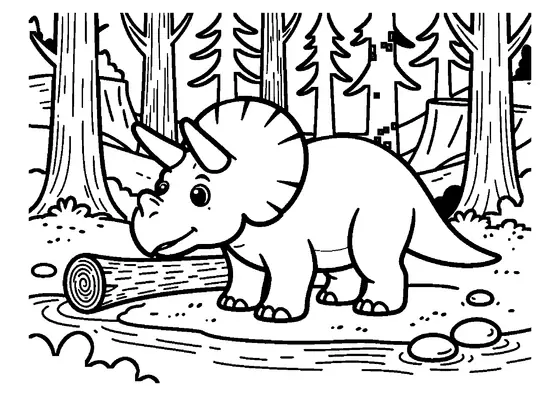
A full-scale triceratops model anchors an exhibit hall in a natural history museum alongside ancient fossils.

A4 format (portrait), black outlines on a white background · for home and classroom use
All coloring pages: Herbivorous Dinosaur Coloring Pages
Similar coloring pages: Herbivorous Dinosaur Coloring Pages


What else can you print? Free, no account needed
Custom Name Coloring Pages
Enter your child's name to generate a custom coloring page featuring large outline letters to color and decorate.
Open generator →Connect the Dots Generator
Eight connect-the-dots pictures across three difficulty levels. Features faint outline guides for younger children and dots only for older kids.
Open generator →Printables
Worksheets, tracing lines, mazes and dot-to-dots in A4.
Browse printables →
Triceratops Model in an Exhibition Hall
Inside a quiet museum gallery, a life-sized model of a triceratops is displayed for visitors. The exhibition space includes an informative display stand and a large preserved fossil positioned nearby to highlight prehistoric history.
Fascinating Facts About Triceratops
The name Triceratops means three-horned face in Greek, referring to the two long brow horns and one short snout horn. Its massive skull frill was made of solid bone, which helped defend its neck against large carnivorous predators.
Realistic Colors of Fossils and Museum Models
- Triceratops model skin: grayish brown, olive green, or dusty yellow
- Triceratops horns and frill: off-white, beige, or weathered ivory
- Fossil specimen: dark mineral brown, cream, or charcoal gray
- Information display stand: dark gray steel or polished dark wood