
Brachiosaurus with Its Neck Held High
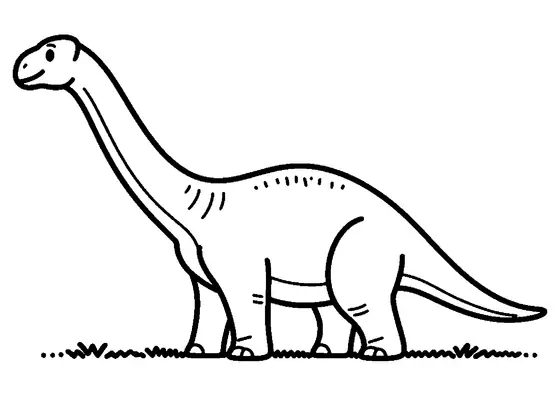
A cheerful giant herbivore towers over vegetation as a smiling Brachiosaurus stands beside a tree canopy.

A4 format (portrait), black outlines on a white background · for home and classroom use
All coloring pages: Herbivorous Dinosaur Coloring Pages
Similar coloring pages: Herbivorous Dinosaur Coloring Pages



What else can you print? Free, no account needed
Custom Name Coloring Pages
Enter your child's name to generate a custom coloring page featuring large outline letters to color and decorate.
Open generator →Connect the Dots Generator
Eight connect-the-dots pictures across three difficulty levels. Features faint outline guides for younger children and dots only for older kids.
Open generator →Printables
Worksheets, tracing lines, mazes and dot-to-dots in A4.
Browse printables →
Smiling Brachiosaurus Beside a Tree
The page presents a smiling Brachiosaurus showing its characteristic long neck reaching upward. Its front legs are longer than its hind limbs, raising its small head next to the upper leaves of a small tree.
Canopy Feeding Habits of Brachiosaurus
Unlike most long-necked dinosaurs, Brachiosaurus held its neck at a steep vertical angle naturally due to its elevated shoulders. This anatomical feature allowed it to graze effortlessly on high coniferous foliage that other plant-eaters could not reach.
Authentic Shade Guide for Brachiosaurus
- Hide: Earthy grayish-brown or muted forest green
- Back ridges: Dark slate gray along the spine
- Tree leaves: Deep emerald green or yellowish-green pine needles
- Tree trunk: Rough dark brown bark