
Rhamphorhynchus Circling Over a Coral Bay
A long-tailed pterosaur soaring over a quiet coastal inlet with vibrant marine life below.

A4 format (landscape), black outlines on a white background · for home and classroom use
All coloring pages: Flying and Sea Reptile Coloring Pages
Similar coloring pages: Flying and Sea Reptile Coloring Pages



What else can you print? Free, no account needed
Custom Name Coloring Pages
Enter your child's name to generate a custom coloring page featuring large outline letters to color and decorate.
Open generator →Connect the Dots Generator
Eight connect-the-dots pictures across three difficulty levels. Features faint outline guides for younger children and dots only for older kids.
Open generator →Printables
Worksheets, tracing lines, mazes and dot-to-dots in A4.
Browse printables →
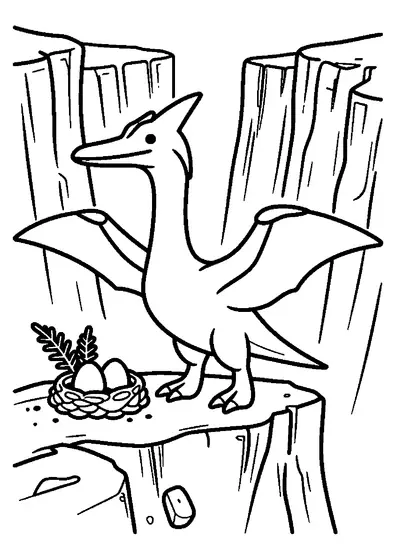
Flying Rhamphorhynchus Over a Bay
A Rhamphorhynchus glides through the air above a peaceful bay filled with underwater coral formations and scattered seashells. Its distinct long tail with a vane end helps it maneuver through sea breezes.
Life of the Long-Tailed Pterosaur
Rhamphorhynchus was a small pterosaur that lived during the Late Jurassic period along warm lagoon shores. It possessed a distinctive diamond-shaped vane at the end of its tail that acted as a rudder during flight. Unlike later toothless pterosaurs, Rhamphorhynchus had sharp, forward-pointing teeth perfect for catching slippery prey while skimming ocean waters.
Realistic Colors of Marine Reptiles and Reefs
- Rhamphorhynchus body: Muted gray, slate blue, or pale tan
- Tail vane: Dark brown or black
- Coral formations: Bright pink, orange, or purple
- Seashells: Creamy white, beige, or pale pink
- Bay water: Clear turquoise or deep azure blue