
Plesiosaur Hunting in an Underwater Kelp Forest
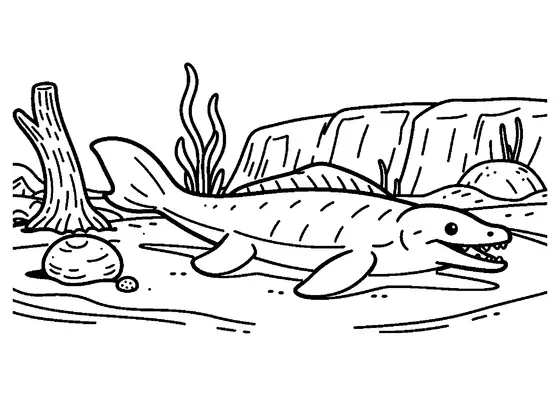
A long-necked plesiosaur maneuvers through tall stalks of aquatic vegetation in a dense prehistoric kelp environment.

A4 format (portrait), black outlines on a white background · for home and classroom use
All coloring pages: Flying and Sea Reptile Coloring Pages
Similar coloring pages: Flying and Sea Reptile Coloring Pages



What else can you print? Free, no account needed
Custom Name Coloring Pages
Enter your child's name to generate a custom coloring page featuring large outline letters to color and decorate.
Open generator →Connect the Dots Generator
Eight connect-the-dots pictures across three difficulty levels. Features faint outline guides for younger children and dots only for older kids.
Open generator →Printables
Worksheets, tracing lines, mazes and dot-to-dots in A4.
Browse printables →
A Plesiosaur Swimming Through Aquatic Kelp
Plesiosaurs were remarkable sea reptiles known for their elongated necks and four distinct flippers. Navigating through underwater kelp forests provided these creatures with shelter and feeding grounds, where they could maneuver gracefully between tall aquatic plants.
Unique Mechanics of the Long Neck
The extraordinary neck of a plesiosaur was composed of numerous individual vertebrae. This flexible anatomy allowed the animal to reach into tight underwater spaces, such as dense marine vegetation, without shifting its entire torso.
Real Colors of Plesiosaurs and Underwater Forests
- Plesiosaur body: Slate gray, ocean blue, or dark teal hide with a pale underside
- Kelp stalks and fronds: Olive green, golden brown, and deep forest green
- Ocean background: Gradated shades of deep blue, aqua, and turquoise water
- Sea floor sediment: Soft beige and grayish-brown sand