
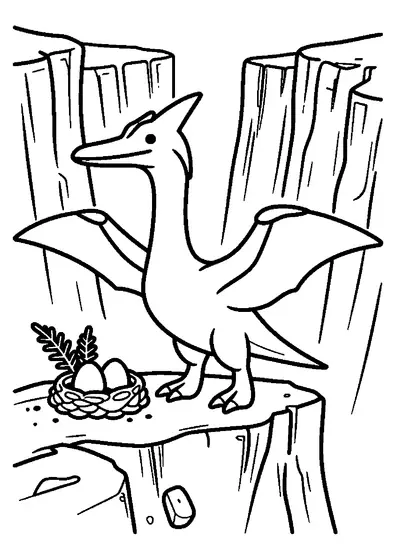
Pterodactyl at a Coastal Nesting Site
A prehistoric flying reptile stretches its broad leather wings atop a windy seaside dune near a shoreline nest.

A4 format (landscape), black outlines on a white background · for home and classroom use
All coloring pages: Flying and Sea Reptile Coloring Pages
Similar coloring pages: Flying and Sea Reptile Coloring Pages


What else can you print? Free, no account needed
Custom Name Coloring Pages
Enter your child's name to generate a custom coloring page featuring large outline letters to color and decorate.
Open generator →Connect the Dots Generator
Eight connect-the-dots pictures across three difficulty levels. Features faint outline guides for younger children and dots only for older kids.
Open generator →Printables
Worksheets, tracing lines, mazes and dot-to-dots in A4.
Browse printables →
A Pterodactyl on a Coastal Sand Dune
A large pterodactyl stands on a sloping dune at a seaside nesting ground with its expansive wing membranes stretched out wide. Positioned beside the creature rests a shallow ground nest set against the sandy coastal terrain. The open setting shows the reptile poised along the breezy shore.
Geological History of Coastal Pterosaurs
Pterodactyls inhabited warm coastal regions where gentle offshore winds aided their launch from sandy shores. Their wings consisted of tough skin membranes supported by an elongated fourth finger, allowing agile maneuvering along ocean coastlines.
Real Shades of Shoreline Pterosaurs
- Pterodactyl wing membrane: Leathery beige, olive, or dark chestnut brown
- Reptile body scales: Muted greenish gray, dull yellow, or earthy brown
- Shoreline sand dune: Pale gold, warm ivory, and soft tan
- Nest materials: Dried sea kelp, pale brown twigs, and weathered plant fibers