
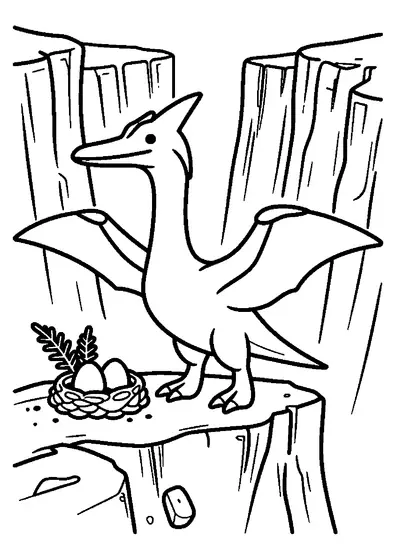
Pteranodon Flying Over a Rocky Bay
A prehistoric flying reptile with a distinctive head crest glides above a calm ocean inlet surrounded by high cliffs.

A4 format (portrait), black outlines on a white background · for home and classroom use
All coloring pages: Flying and Sea Reptile Coloring Pages
Similar coloring pages: Flying and Sea Reptile Coloring Pages


What else can you print? Free, no account needed
Custom Name Coloring Pages
Enter your child's name to generate a custom coloring page featuring large outline letters to color and decorate.
Open generator →Connect the Dots Generator
Eight connect-the-dots pictures across three difficulty levels. Features faint outline guides for younger children and dots only for older kids.
Open generator →Printables
Worksheets, tracing lines, mazes and dot-to-dots in A4.
Browse printables →
Pteranodon Soaring Above a Cliffside Bay
This landscape presents a long-crested Pteranodon traveling across the open sky above a calm bay. Steep rocky cliffs border the sheltered water below, creating a secluded coastal environment. The reptile glides over the ocean inlet while the towering cliff walls line the background.
Crest Function and Bay Ecosystems
The backward-pointing crest on the head of a Pteranodon may have acted as a rudder for steering during low-altitude flights over water. Shallow bays provided calm feeding grounds where flying reptiles could spot fish swimming near the surface without facing harsh ocean currents. Rising air currents along steep bay cliffs helped these large creatures launch into the air without expending excessive energy.
Authentic Colors of Pteranodon and Cliff Landscapes
- Pteranodon body skin: earthy tones of olive green, gray, or tan
- Pteranodon head crest: reddish-orange or brownish skin pigment used for species recognition
- Pteranodon wing skin: dark tan or dusky brown leathery tissue
- Steep rocky cliffs: shades of dark gray, brown earth, and ochre rock layers
- Bay water: deep navy blue, teal, or turquoise near shallow cliff edges