
Henodus with a Flat Shell
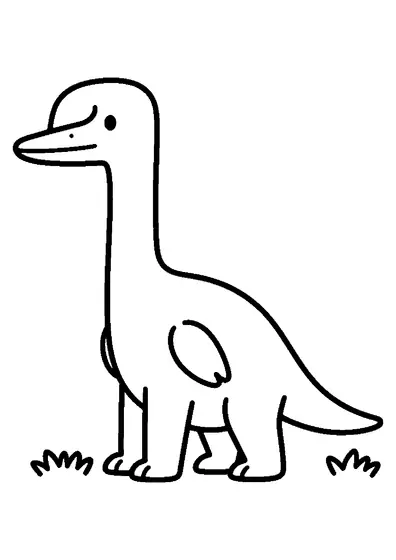
An unusual shell-covered reptile named Henodus presents its broad shield-like body in profile.

A4 format (landscape), black outlines on a white background · for home and classroom use
All coloring pages: Flying and Sea Reptile Coloring Pages
Similar coloring pages: Flying and Sea Reptile Coloring Pages




What else can you print? Free, no account needed
Custom Name Coloring Pages
Enter your child's name to generate a custom coloring page featuring large outline letters to color and decorate.
Open generator →Connect the Dots Generator
Eight connect-the-dots pictures across three difficulty levels. Features faint outline guides for younger children and dots only for older kids.
Open generator →Printables
Worksheets, tracing lines, mazes and dot-to-dots in A4.
Browse printables →
Distinctive Features of Henodus and its Flat Protective Shell
Henodus was a Triassic placodont famous for its flat, square-shaped shell that closely resembled the armor of a modern turtle. Seen from the side, this creature shows a compact snout, small flipper-like legs, and a wide body shield composed of fused bony plates. It lived in quiet coastal lagoons and brackish estuaries where its broad shape offered protection.
Unique Adaptations of Turtle-Like Prehistoric Reptiles
Unlike most other marine reptiles of its era, Henodus lived in shallow, low-salt water environments such as coastal lagoons. Instead of strong crushing teeth, it possessed baleen-like strainers or small plates along its jaws to filter tiny organisms from muddy water. Its flat shell was remarkably thin yet rigid, shielding the animal from unexpected coastal predators.
Realistic Shades for Henodus and its Armored Body Parts
- Broad flat shell: Dark moss green, dull brown, or dark slate gray with earthy patches
- Short snout and head: Pale tan, olive brown, or muted grayish beige
- Flipper-like legs: Sandy brown or dark gray with lighter underside skin
- Tail and lower limbs: Dark olive or muddy gray matching riverbed silt
- Shell edges and plates: Muted cream or light brownish tan highlights