
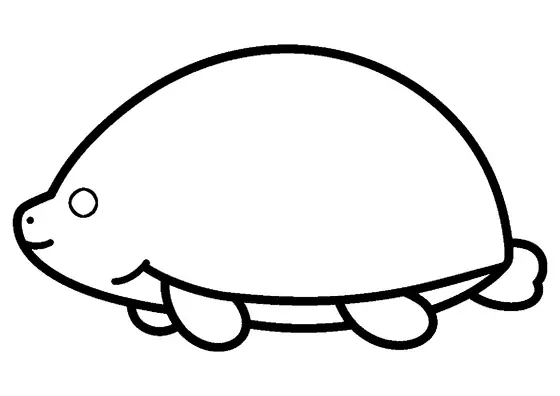
Broad-Bodied Placodus
A heavy prehistoric marine reptile called Placodus remains still beside a gently rolling sea wave.

A4 format (landscape), black outlines on a white background · for home and classroom use
All coloring pages: Flying and Sea Reptile Coloring Pages
Similar coloring pages: Flying and Sea Reptile Coloring Pages



What else can you print? Free, no account needed
Custom Name Coloring Pages
Enter your child's name to generate a custom coloring page featuring large outline letters to color and decorate.
Open generator →Connect the Dots Generator
Eight connect-the-dots pictures across three difficulty levels. Features faint outline guides for younger children and dots only for older kids.
Open generator →Printables
Worksheets, tracing lines, mazes and dot-to-dots in A4.
Browse printables →
The Sturdy Structure of Placodus near Prehistoric Waters
Placodus was a thick-bodied marine reptile with a short head, heavy torso, and strong tail that inhabited shallow sea margins. Its dense skeleton helped it stay anchored near the seabed while searching for food along the coastline. Resting near ocean waves, this heavily built creature relied on its sturdy body for stability in shallow water.
Survival Habits of Shell-Crushing Marine Reptiles
Placodus possessed specialized flat teeth designed specifically to crush the hard shells of mollusks and brachiopods. Its heavy bones acted like ballast in a submarine, enabling the animal to stay near the seafloor without expending extra energy. Because it was not a fast swimmer, it relied on camouflage and thick armor-like body protection to stay safe from larger predators.
Natural Color Palettes for Placodus and Shallow Sea Waves
- Broad body armor: Dark olive green, charcoal gray, or deep mud brown along the upper back
- Short head and snout: Dusty gray or mottled tan to blend into sandy ocean floors
- Thick tail: Dark brownish gray with subtle stripes for underwater camouflage
- Underside of the torso: Off-white, soft cream, or pale sandy yellow
- Sea wave: Soft blue, turquoise, or sea-foam green near the shore