
Allosaurus in a Deep Rocky Canyon
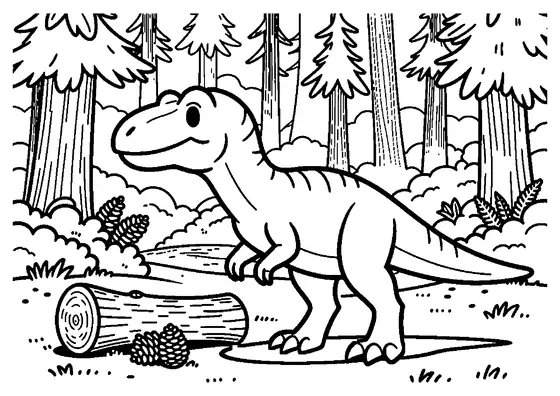
An Allosaurus moves through a deep rocky canyon beside a large boulder.

A4 format (portrait), black outlines on a white background · for home and classroom use
All coloring pages: Dinosaur Coloring Pages
Similar coloring pages: Dinosaur Coloring Pages



What else can you print? Free, no account needed
Custom Name Coloring Pages
Enter your child's name to generate a custom coloring page featuring large outline letters to color and decorate.
Open generator →Connect the Dots Generator
Eight connect-the-dots pictures across three difficulty levels. Features faint outline guides for younger children and dots only for older kids.
Open generator →Printables
Worksheets, tracing lines, mazes and dot-to-dots in A4.
Browse printables →
Allosaurus in a Canyon
The prehistoric predator is shown prowling through a dramatic canyon of exposed rock. A large boulder stands nearby, emphasizing the rugged terrain surrounding the Allosaurus. Its powerful hind legs, long tail, three-fingered hands, and large head identify it as an active meat-eating dinosaur.
How Rocky Canyons Develop
Many canyons are carved gradually as flowing water carries away weathered rock, although wind and other forces can also reshape their walls. Harder layers often erode more slowly than softer ones, producing ledges, steep faces, and fallen boulders. Allosaurus used its tail as a counterbalance while walking on two legs through the landscapes it inhabited.
Natural Colors for the Dinosaur and Canyon
- Allosaurus skin: the exact shade is unknown; brown, gray, muted green, or sandy tones are scientifically cautious options
- Back and flanks: darker stripes, spots, or mottling are possible but have not been established from fossils
- Belly and throat: a lighter tan or pale gray could create natural countershading
- Large boulder: sandstone brown, granite gray, rust, or charcoal depending on its minerals
- Canyon rock: layered tans, reds, browns, or grays commonly occur in real formations