
Easter Egg with Thistle Flowers
A decorative holiday egg rests upon a goblet-shaped pedestal while symmetrical thistle stems with leaves and buds frame the motif.

A4 format (portrait), black outlines on a white background · for home and classroom use
All coloring pages: Pattern and Ornament Coloring Pages
Similar coloring pages: Pattern and Ornament Coloring Pages
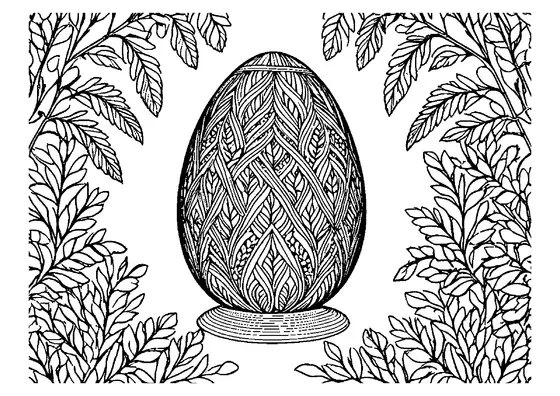


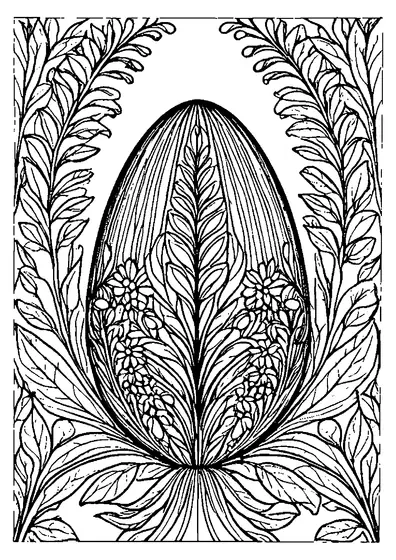

Ornate Easter Egg with Thistle Foliage
This vertical composition showcases an ornate holiday egg positioned on a goblet-style pedestal in a balanced setup. The top of the egg is topped by a thistle flower bud. Expanding stems stretch out along both sides, bearing spreading green leaves and developing flower buds around the central vessel.
Fascinating Thistle Facts
Thistles are resilient wild plants known for their distinctive spiky leaves and vibrant purple or magenta flower heads that attract pollinators like bumblebees. In historical traditions, thistle blossoms were harvested and dried to create natural dyes for textiles and decorative crafts. The prickly foliage serves as a natural defense mechanism to deter browsing herbivores in field habitats.
Real Colors of Thistles and Easter Eggs
- Thistle flower bud: Purple, magenta, or deep violet at the tip with green lower scales
- Thistle leaves: Deep olive green or muted sage green
- Stems: Light green with subtle pale green highlights
- Goblet stand: Polished brass gold, dark bronze, or silver ceramic
- Egg surface: Pastel pink, soft yellow, or light sky blue