
Easter Egg with Papyrus Fans
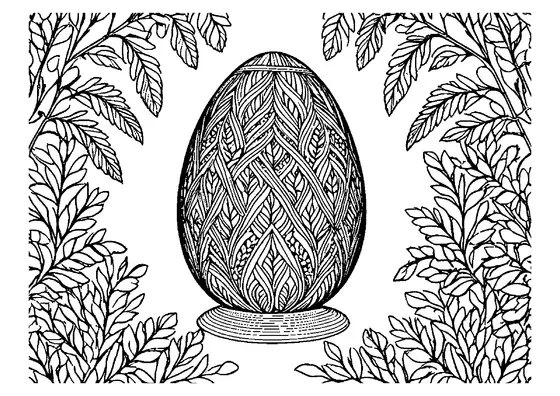
A lattice-patterned Easter egg is centerpiece to a horizontal layout featuring fan-shaped papyrus leaves expanding outward in an oval shape.

A4 format (landscape), black outlines on a white background · for home and classroom use
All coloring pages: Pattern and Ornament Coloring Pages
Similar coloring pages: Pattern and Ornament Coloring Pages


Horizontal Oval Composition with Papyrus Fans
This horizontal design centers on an upright Easter egg decorated with lattice netting and curved arch motifs. Spreading outward to the left and right sides are broad, fan-like papyrus fronds, arranging the entire composition within a balanced oval structure.
Natural History of Papyrus Plants
Papyrus is a tall aquatic sedge native to African freshwater wetlands, famously cultivated along the Nile River delta. The plant features thick triangular stems topped by umbrella-like clusters of thread-like green rays. Ancient civilizations harvested papyrus stems to produce early writing sheets, woven mats, and lightweight river skiffs.
Natural Tones of Papyrus and Patterned Eggs
- Papyrus Fan Fronds: Bright grass green to rich olive green
- Papyrus Stem Base: Pale yellow-green or brownish reed tones
- Patterned Egg Shell: Deep turquoise, terracotta red, gold, or warm cream