
Easter Egg on a Lace Doily
A circular floral rosette forms the heart of this ornamental design, encircled by concentric rings and sprawling vine tendrils.

A4 format (landscape), black outlines on a white background · for home and classroom use
All coloring pages: Pattern and Ornament Coloring Pages
Similar coloring pages: Pattern and Ornament Coloring Pages


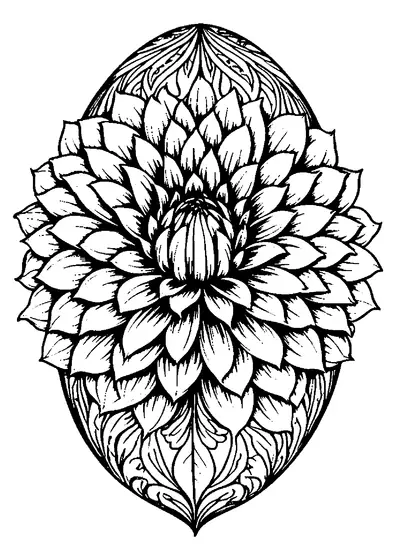

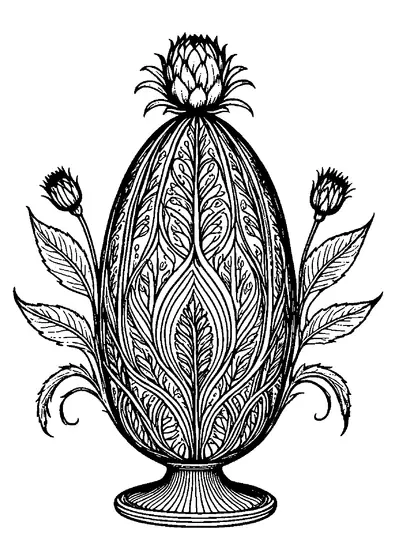

Symmetrical Floral Rosette and Sprawling Botanical Vines
At the center of this ornamental arrangement, a circular floral rosette is framed by smooth concentric rings. Stylized leaves, developing flower buds, and curving vine tendrils extend outward from the central circle toward the outer sides of the pattern.
Craftsmanship and Traditions of Lace Doilies
Lace doilies were originally hand-crocheted or tatted from fine threads to protect wooden furniture surfaces from scratches and moisture. Crafters form intricate rosette motifs by working in spiraling rows, creating balanced geometric patterns that resemble delicate flowers or cobwebs.
Natural Palette of Fine Lace and Spring Plant Motifs
- Woven lace threads: bleached cotton white, cream ivory, or soft ecru
- Floral rosette center: soft rose pink, muted yellow, or pale violet
- Sprawling vine tendrils: tender spring green with burgundy leaf tips
- Concentric rings: warm beige or pale golden thread work