
Autumn Maple Leaf Mandala
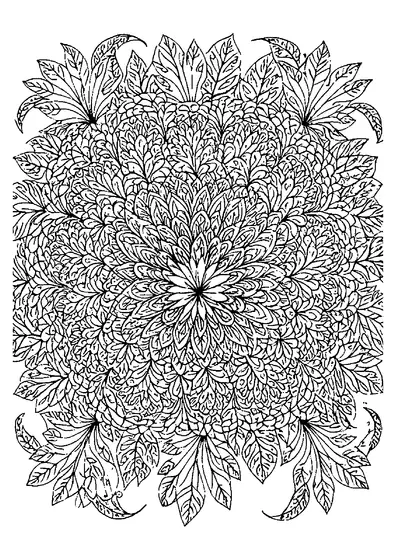
Layered maple leaves radiate outward in a symmetrical autumn rosette accented by tiny stars and dots.

A4 format (landscape), black outlines on a white background · for home and classroom use
All coloring pages: Pattern and Ornament Coloring Pages
Similar coloring pages: Pattern and Ornament Coloring Pages


What the Autumn Maple Leaf Mandala Shows
Maple leaves are arranged in repeating layers around the center, forming a dense oval mandala. Their pointed lobes and branching veins give each ring a recognizable autumn character. Small stars and dots surround the rosette as simple decorative accents, while the leaves remain the dominant motif.
Fascinating Facts About Maple Leaves in Fall
Maple leaves contain pigments that are hidden by green chlorophyll during much of the growing season. As daylight decreases, chlorophyll breaks down and warmer colors become visible. Some maples also produce red pigments from sugars trapped in their leaves during fall.
Real-Life Colors of Maple Leaves
- Spring maple leaves: often pale green, yellow-green, or reddish
- Summer maple leaves: usually medium to deep green
- Early autumn leaves: green mixed with yellow, orange, or red
- Peak fall leaves: bright yellow, orange, scarlet, burgundy, or combinations of these shades
- Leaf veins and stems: green, yellow, red, tan, or brown, depending on age and species