
Greater Kudu in the Limpopo Valley
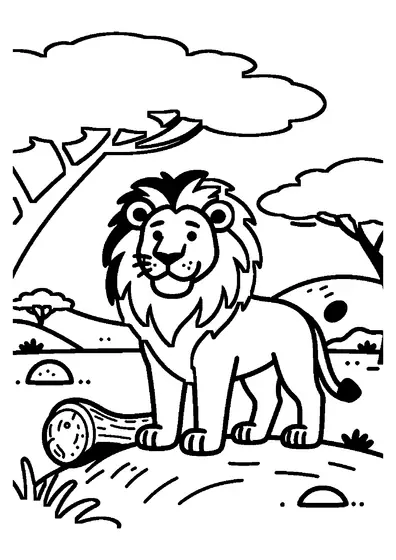
A male greater kudu displays its impressive spiral horns beside a fallen tree branch in the sunny Limpopo Valley.

A4 format (portrait), black outlines on a white background · for home and classroom use
All coloring pages: African Animal Coloring Pages
Similar coloring pages: African Animal Coloring Pages



What else can you print? Free, no account needed
Custom Name Coloring Pages
Enter your child's name to generate a custom coloring page featuring large outline letters to color and decorate.
Open generator →Connect the Dots Generator
Eight connect-the-dots pictures across three difficulty levels. Features faint outline guides for younger children and dots only for older kids.
Open generator →Printables
Worksheets, tracing lines, mazes and dot-to-dots in A4.
Browse printables →
Male Greater Kudu in the Limpopo Valley
A greater kudu stands alongside a weathered branch in the open Limpopo Valley landscape. Known for their striking vertical coat stripes and towering spiral horns, these large antelopes blend seamlessly into wooded African brushlands.
Natural History of the Spiral-Horned Antelope
Only male greater kudus grow the iconic twisted horns, which take up to six years to reach full length with two and a half complete spirals. Despite their large size, kudus are exceptional jumpers capable of clearing obstacles over eight feet high when startled. They rely on their broad ears to detect subtle sounds across dense thickets.
Authentic Colors of the Greater Kudu
- Male kudu coat: Reddish brown, grayish brown, or slate gray
- Torso stripes: Thin white or light cream vertical lines
- Spiral horns: Dark brown to black with polished tips
- Facial chevron mark: White stripe across the bridge of the nose
- Fallen wooden branch: Weathered gray or dry bark brown