
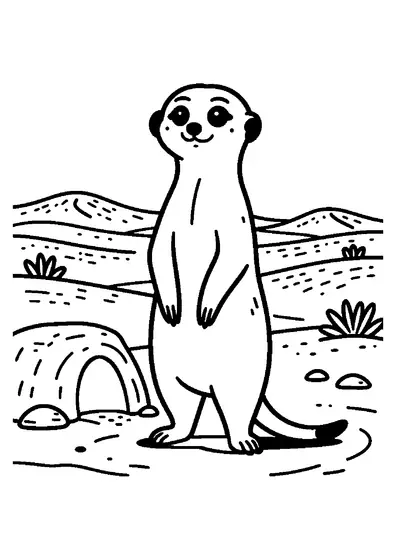
Fennec fox standing among sandy desert dunes
A small fennec fox stands amidst the vast sand dunes of a dry desert landscape.

A4 format (portrait), black outlines on a white background · for home and classroom use
All coloring pages: African Animal Coloring Pages
Similar coloring pages: African Animal Coloring Pages




What else can you print? Free, no account needed
Custom Name Coloring Pages
Enter your child's name to generate a custom coloring page featuring large outline letters to color and decorate.
Open generator →Connect the Dots Generator
Eight connect-the-dots pictures across three difficulty levels. Features faint outline guides for younger children and dots only for older kids.
Open generator →Printables
Worksheets, tracing lines, mazes and dot-to-dots in A4.
Browse printables →
Fennec Fox Resting on Desert Dunes
This illustration depicts a desert fennec fox surrounded by rolling hills of fine sand. The fox features signature oversized ears that help it thrive in hot arid environments. Desert dunes stretch across the background, showing the vast open wilderness where this small wild mammal makes its home.
How Fennec Foxes Adapt to Desert Life
The large ears of a fennec fox serve a dual purpose in extreme climates. They radiate body heat to keep the animal cool during blistering desert afternoons and allow the fox to hear underground insects moving beneath the sand. Thick fur covering their footpads acts like natural sandals, protecting their paws from hot desert surfaces.
Real Colors of the Desert Fennec Fox
- Fennec fox coat: Creamy buff, pale sandy yellow, and off-white on the underbelly
- Fennec fox eyes and nose: Deep dark brown or black
- Desert sand dunes: Golden yellow, warm orange-tinted tan, and light cream
- Desert sky: Clear bright blue or soft orange during sunset