
Ladybug Beside a Large Planter of Pansies
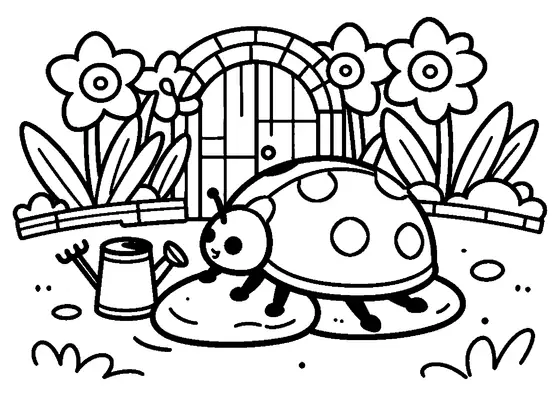
A garden scene features a small ladybug crawling next to a wooden planter filled with blooming pansies.

A4 format (portrait), black outlines on a white background · for home and classroom use
All coloring pages: Ladybug Coloring Pages
Similar coloring pages: Ladybug Coloring Pages


What else can you print? Free, no account needed
Custom Name Coloring Pages
Enter your child's name to generate a custom coloring page featuring large outline letters to color and decorate.
Open generator →Connect the Dots Generator
Eight connect-the-dots pictures across three difficulty levels. Features faint outline guides for younger children and dots only for older kids.
Open generator →Printables
Worksheets, tracing lines, mazes and dot-to-dots in A4.
Browse printables →
A Ladybug and a Wooden Planter of Pansies
A small ladybug sits on the ground next to a sturdy wooden planter. Inside the container, several pansies grow closely together with broad petals. Wooden planters keep garden roots cool during warm weather while providing a decorative display.
Interesting Facts About Pansies and Ladybugs
Pansies are cool-weather flowers known for their heart-shaped, overlapping petals that often resemble little faces. Ladybugs frequently visit garden flowerbeds because they eat tiny pests like aphids that feed on plant leaves. These small beetles hibernate together in groups during cold winter months under dry leaves and wooden structures.
Natural Colors of Pansies and Ladybugs
- Ladybug body: bright red or orange with black spots and a black head
- Pansy petals: combinations of yellow, purple, white, and deep violet
- Pansy leaves: rich dark green
- Wooden planter: natural brown, weathered gray, or warm tan