
Ladybug Among Daffodils in a Spring Garden
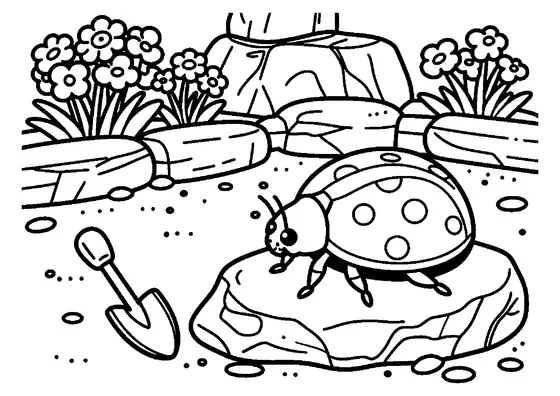
A ladybug explores a spring flowerbed filled with blooming yellow daffodils next to a small garden trowel.

A4 format (landscape), black outlines on a white background · for home and classroom use
All coloring pages: Ladybug Coloring Pages
Similar coloring pages: Ladybug Coloring Pages


What else can you print? Free, no account needed
Custom Name Coloring Pages
Enter your child's name to generate a custom coloring page featuring large outline letters to color and decorate.
Open generator →Connect the Dots Generator
Eight connect-the-dots pictures across three difficulty levels. Features faint outline guides for younger children and dots only for older kids.
Open generator →Printables
Worksheets, tracing lines, mazes and dot-to-dots in A4.
Browse printables →
A Springtime Beetle Surrounded by Bright Daffodils
In this garden setting, a ladybug appears among blooming daffodils alongside a hand trowel. Daffodils are among the earliest flowers to bloom in spring, signaling the season when overwintering insects emerge to seek nourishment.
Nature Knowledge: Spring Blooms and Ladybugs
Daffodil flowers contain a natural alkaloid compound called lycorine, which deters most plant-eating animals but leaves beneficial beetles unharmed. Ladybugs actively crawl over early spring petals while foraging for small insects that awaken in warm soil.
Actual Colors of Spring Garden Blooms
- Daffodil flower petals: bright yellow, creamy white, or pale orange
- Daffodil central trumpet cup: vivid golden yellow or orange-red
- Ladybug body and antennae: glossy black with distinct reddish wing covers
- Garden trowel blade and handle: metallic steel gray with a wooden brown handle