
Ladybug Beneath an Old Oak Tree
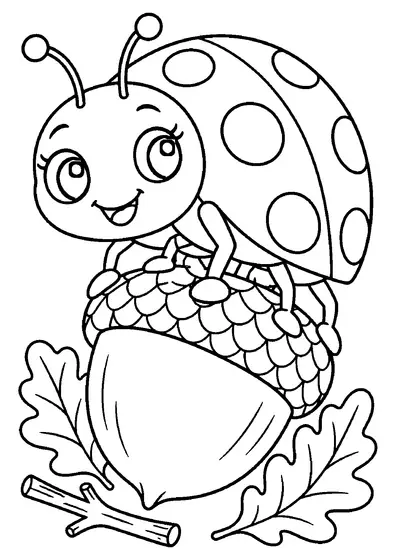
An autumn woodland scene features a ladybug resting beside a fallen acorn and leaf under the canopy of an oak tree.

A4 format (portrait), black outlines on a white background · for home and classroom use
All coloring pages: Ladybug Coloring Pages
Similar coloring pages: Ladybug Coloring Pages
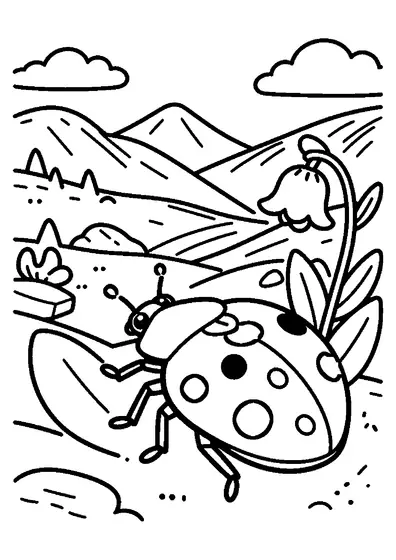


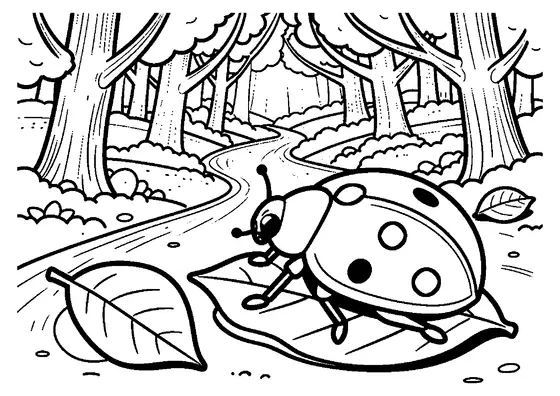
What else can you print? Free, no account needed
Custom Name Coloring Pages
Enter your child's name to generate a custom coloring page featuring large outline letters to color and decorate.
Open generator →Connect the Dots Generator
Eight connect-the-dots pictures across three difficulty levels. Features faint outline guides for younger children and dots only for older kids.
Open generator →Printables
Worksheets, tracing lines, mazes and dot-to-dots in A4.
Browse printables →
A Ladybug Under a Spreading Oak
This forest scene highlights a small ladybug stationed along a dirt path beneath a mature oak tree. Right next to the beetle, a large oak leaf and an acorn rest on the ground, capturing an autumnal woodland environment.
Oak Trees and Woodland Ecosystems
Oak trees are essential components of temperate forests, providing food and shelter for hundreds of animal and insect species. In the autumn, oaks drop acorns along with their broad leaves, transforming the forest ground into a rich organic layer. Ladybugs often seek out these fallen leaves and acorns to find shelter from cool winds as seasonal temperatures begin to drop.
Natural Colors of an Autumn Oak Woodland
- Ladybug wings: glossy red or yellow-orange with black dots
- Oak leaf: golden yellow, rusty brown, or deep red in autumn
- Acorn cap: rough grayish brown
- Acorn nut: smooth tan or greenish brown
- Oak bark and path: dark gray and earthy brown