
Ladybug in an Autumn Beech Forest
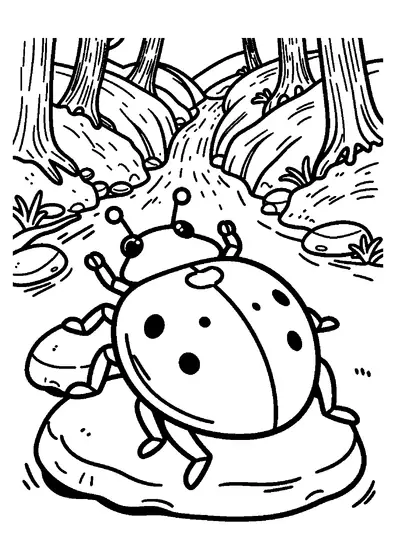
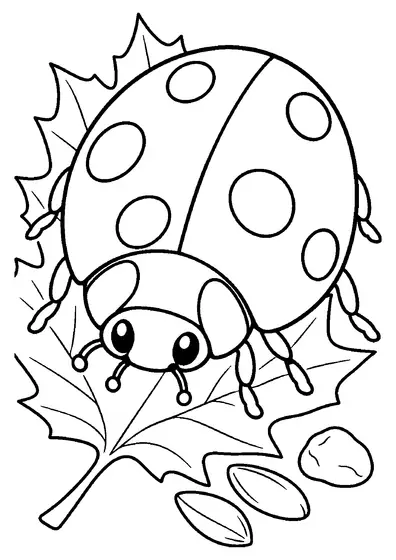
A ladybug climbs across a curled leaf along a winding path inside an autumn forest filled with smooth beech trees.

A4 format (landscape), black outlines on a white background · for home and classroom use
All coloring pages: Ladybug Coloring Pages
Similar coloring pages: Ladybug Coloring Pages
What else can you print? Free, no account needed
Custom Name Coloring Pages
Enter your child's name to generate a custom coloring page featuring large outline letters to color and decorate.
Open generator →Connect the Dots Generator
Eight connect-the-dots pictures across three difficulty levels. Features faint outline guides for younger children and dots only for older kids.
Open generator →Printables
Worksheets, tracing lines, mazes and dot-to-dots in A4.
Browse printables →
A Beech Forest in Autumn
In this woodland setting, a ladybug navigates a curled fallen leaf along a gently curving forest path. Smooth tree trunks rise on either side of the walkway, framed by large autumn beech leaves scattered across the forest landscape.
Characteristics of Beech Forests
Beech trees are famous for their smooth, silver-gray bark that remains sleek even as the tree matures over decades. During autumn, beech leaves turn vibrant shades of yellow and copper-bronze before carpeting the forest floor. The dense leaf canopy of a beech forest creates a cool, shaded environment that retains moisture, which attracts diverse insects such as ladybugs.
Authentic Colors of Beech Trees and Foliage
- Ladybug body: bright orange-red shell with dark spots
- Beech tree bark: smooth light gray
- Curled beech leaf: warm bronze or golden yellow
- Forest path: muted brown dirt and soil
- Beech leaf undersides: pale tan or soft amber