
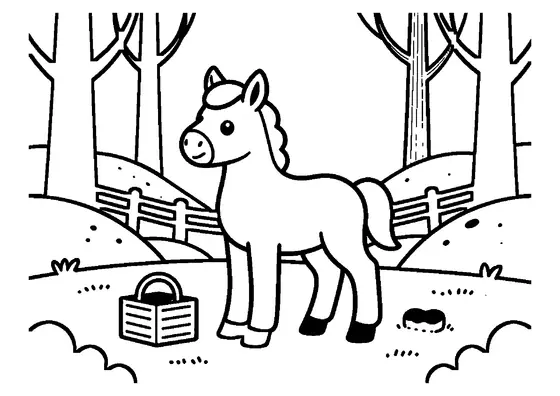
Foal Beside a Forest Ranger’s Cabin and Fence
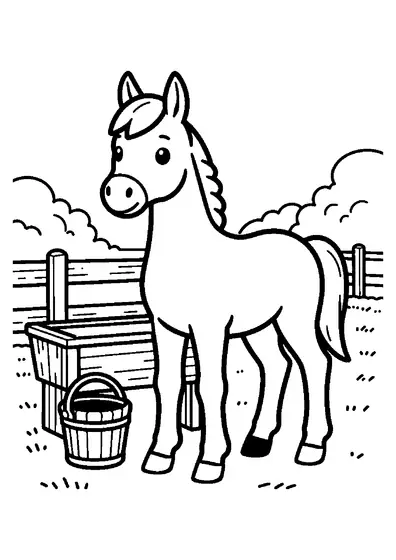
A curious foal rests near a wooden fence next to a rustic forest ranger cabin in the woods.

A4 format (landscape), black outlines on a white background · for home and classroom use
All coloring pages: Foal Coloring Pages
Similar coloring pages: Foal Coloring Pages


What else can you print? Free, no account needed
Custom Name Coloring Pages
Enter your child's name to generate a custom coloring page featuring large outline letters to color and decorate.
Open generator →Connect the Dots Generator
Eight connect-the-dots pictures across three difficulty levels. Features faint outline guides for younger children and dots only for older kids.
Open generator →Printables
Worksheets, tracing lines, mazes and dot-to-dots in A4.
Browse printables →
A Woodland Encounter by a Ranger Cabin and Fence
Forest rangers live and work in wooden cabins situated deep inside woodland parks and protected wilderness areas. Sturdy timber fences surrounded these stations to keep working horses safely enclosed while protecting property boundaries. Young foals raised in forest settlements become accustomed to dense trees, quiet woodland trails, and natural timber structures.
The Role of Horses in Forest Management
Forest rangers frequently ride horses to patrol remote wilderness trails where motor vehicles cannot travel smoothly. Horses can navigate narrow mountain paths, cross fallen logs, and step over rough terrain without harming delicate forest ground cover. Foals born to ranger mounts learn to navigate forest paths and wooden fence lines early in life.
Real Colors of Forest Cabins and Woodland Horses
- Foal coat: dark bay, roan, black, or reddish chestnut
- Ranger cabin log walls: warm pine amber, dark cedar brown, or mossy gray timber
- Wooden fence rails: weathered silver-gray, golden pine, or rich chestnut brown
- Ranger cabin roof shingles: slate gray, forest green, or dark brown wood shake