
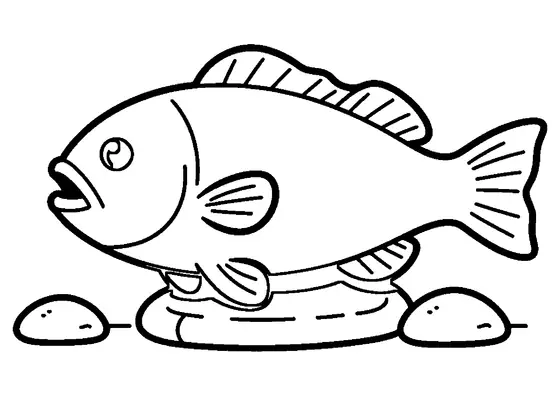
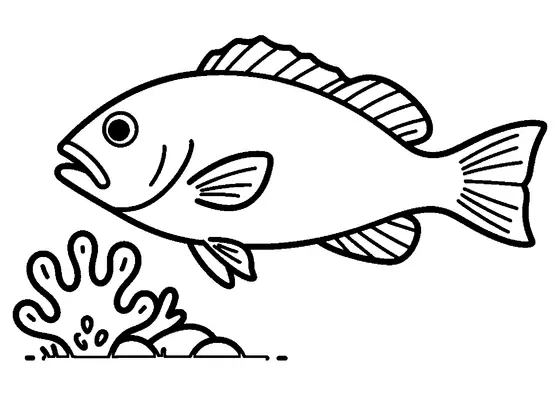
Wrasse Fish Side Profile
A side profile of a wrasse displaying its elongated body outline, prominent thick lips, and smooth rounded tail fin.

A4 format (landscape), black outlines on a white background · for home and classroom use
All coloring pages: Fish and Ocean Life Coloring Pages
Similar coloring pages: Fish and Ocean Life Coloring Pages


What else can you print? Free, no account needed
Custom Name Coloring Pages
Enter your child's name to generate a custom coloring page featuring large outline letters to color and decorate.
Open generator →Connect the Dots Generator
Eight connect-the-dots pictures across three difficulty levels. Features faint outline guides for younger children and dots only for older kids.
Open generator →Printables
Worksheets, tracing lines, mazes and dot-to-dots in A4.
Browse printables →
Characteristics of the Wrasse Profile
Wrasses are distinguished by their streamlined, elongated body form, thick fleshy lips, and rounded caudal fin. Their long silhouette enables them to navigate tight crevices in rocky marine environments, while their specialized mouth structure aids in securing prey from hard surfaces.
Daily Routine of Reef Cleaners
Many wrasse species act as underwater caretakers on ocean reefs by removing parasites and dead skin from larger fish species. These dedicated cleaner wrasses set up specific stations where large marine animals visit to be groomed. At night, some wrasses bury themselves completely under shallow ocean sand to rest safely from nocturnal predators.
Natural Color Patterns of Wrasses
- Body scale background: Electric blue or vibrant emerald green
- Side stripes or markings: Bright yellow, pink, or orange
- Thick lips: Soft violet or pale rose
- Tail fin edge: Dark navy or translucent gray