
Duck by the Reeds at a Country Pond
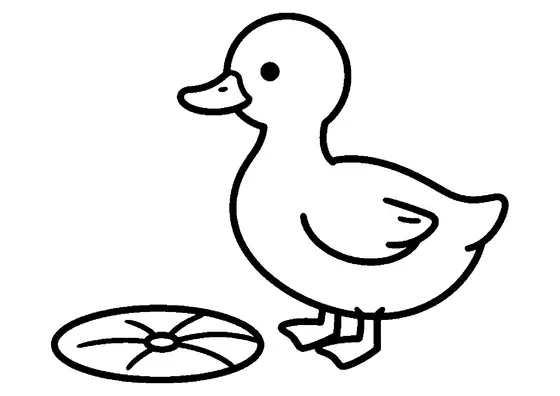
A mallard stands by the reeds of a country pond near wooden oars and a decorated Easter egg resting on a stone.

A4 format (landscape), black outlines on a white background · for home and classroom use
All coloring pages: Farm Animal Coloring Pages
Similar coloring pages: Farm Animal Coloring Pages



What else can you print? Free, no account needed
Custom Name Coloring Pages
Enter your child's name to generate a custom coloring page featuring large outline letters to color and decorate.
Open generator →Connect the Dots Generator
Eight connect-the-dots pictures across three difficulty levels. Features faint outline guides for younger children and dots only for older kids.
Open generator →Printables
Worksheets, tracing lines, mazes and dot-to-dots in A4.
Browse printables →
A mallard at the country pond
The mallard is on the shore beside pond reeds, with wooden oars nearby and a decorated Easter egg placed on a stone. The waterside setting brings together a familiar pond bird and objects connected with both boating and Easter. The shore offers the duck access to water as well as firm ground for resting and walking.
Pond facts about mallards and reeds
Mallards feed in shallow water by tipping forward to reach plants and small aquatic animals without diving completely below the surface. Reeds along a pond can provide shelter for birds and other wildlife while their roots help hold wet soil in place. Ducks spread natural oil over their feathers while preening, which helps the plumage resist water.
True colors of the mallard and pond setting
- Male mallard head: glossy green with a narrow white neck ring
- Male mallard chest and body: chestnut brown with pale gray sides
- Female mallard feathers: mottled tan and brown
- Bill and feet: yellowish bill on many males, orange-brown bills on females, and orange feet
- Reeds and wooden oars: green to straw-colored reeds and tan to dark brown wood