
Thuringer Rabbit by a Country Hop Kiln
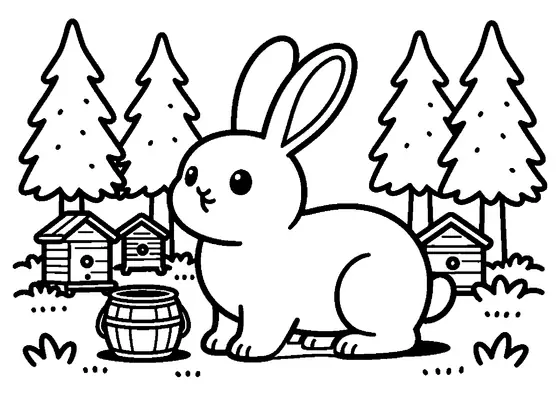
A Thuringer rabbit sits beside a leaf-filled wooden crate in front of a brick hop kiln in the countryside.

A4 format (portrait), black outlines on a white background · for home and classroom use
All coloring pages: Bunny Coloring Pages
Similar coloring pages: Bunny Coloring Pages



What else can you print? Free, no account needed
Custom Name Coloring Pages
Enter your child's name to generate a custom coloring page featuring large outline letters to color and decorate.
Open generator →Connect the Dots Generator
Eight connect-the-dots pictures across three difficulty levels. Features faint outline guides for younger children and dots only for older kids.
Open generator →Printables
Worksheets, tracing lines, mazes and dot-to-dots in A4.
Browse printables →
A rabbit near the country hop kiln
The seated Thuringer rabbit shares the setting with a wooden crate filled with leaves. Behind them stands a brick hop kiln, a farm building traditionally used to dry harvested hops. Together, these elements show a quiet rural place connected with an old agricultural process.
How a hop kiln works
Freshly picked hops contain moisture and need careful drying before storage. In a traditional kiln, warm air passes through spread-out hops and carries the moisture away. The dried flower cones are valued for the bitterness and aroma they can add during brewing.
Natural colors of the rabbit and its surroundings
- Thuringer rabbit coat: warm yellow-brown or tawny with darker smoky shading
- Rabbit ears, face, and sides: often deeper brown or charcoal shading
- Rabbit eyes: dark brown
- Wooden crate: pale tan, honey brown, dark brown, or weathered gray
- Hop kiln bricks: muted red, orange-brown, brown, or sooty dark gray