
Belgian Hare by an Old Woodland Apiary
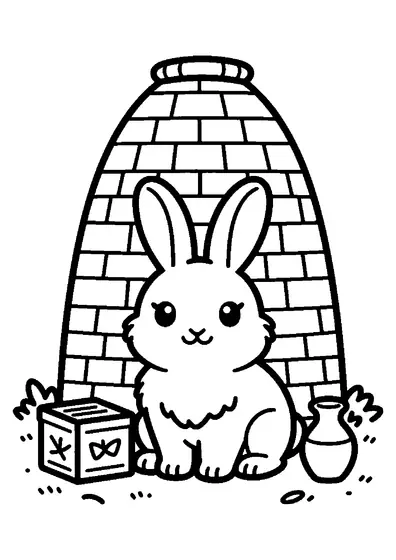
A Belgian Hare stands in a serene woodland clearing next to traditional wooden beehives and an earthenware jug.

A4 format (landscape), black outlines on a white background · for home and classroom use
All coloring pages: Bunny Coloring Pages
Similar coloring pages: Bunny Coloring Pages



What else can you print? Free, no account needed
Custom Name Coloring Pages
Enter your child's name to generate a custom coloring page featuring large outline letters to color and decorate.
Open generator →Connect the Dots Generator
Eight connect-the-dots pictures across three difficulty levels. Features faint outline guides for younger children and dots only for older kids.
Open generator →Printables
Worksheets, tracing lines, mazes and dot-to-dots in A4.
Browse printables →
Belgian Hare in a Woodland Apiary
The Belgian Hare is an elegant breed of domestic rabbit bred to resemble a wild hare, featuring a slender body, arched back, and long muscular legs. A woodland apiary is a location in the forest where wooden beehives are kept for honey production. Earthenware jugs were historically used in rural clearings to hold fresh water or collected raw honey.
Heritage Characteristics of Belgian Hares and Beekeeping
Despite its name, the Belgian Hare is a true domestic rabbit rather than a wild hare, renowned for its athletic build and high intelligence. Beekeepers often place apiaries in sheltered forest openings where wild flowering plants provide abundant nectar for honeybees. Glazed earthenware pottery was favored in historic farmsteads for keeping liquids cool under shaded trees.
Natural Color Guide for the Woodland Apiary
- Belgian Hare coat: Deep chestnut red with rich rust highlights
- Belgian Hare eyes: Dark brown with hazel tones
- Grass in clearing: Vibrant green or golden summer blades
- Wooden beehive: Unpainted pine brown or weathered gray timber
- Earthenware jug: Warm terracotta orange or beige clay color