
Satin Rabbit by a Brick Blacksmith Shop with Anvil
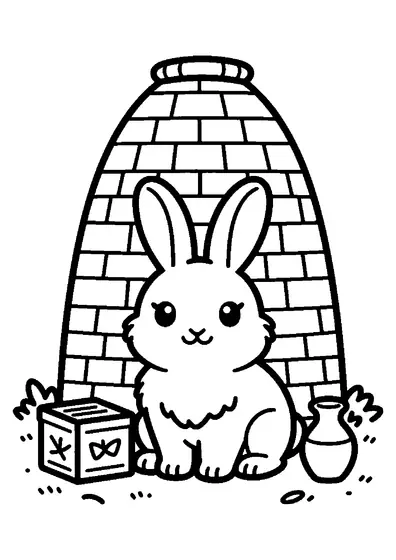
A glossy Satin rabbit stands beside a heavy iron anvil and a water bucket outside a historic brick blacksmith shop.

A4 format (landscape), black outlines on a white background · for home and classroom use
All coloring pages: Bunny Coloring Pages
Similar coloring pages: Bunny Coloring Pages


What else can you print? Free, no account needed
Custom Name Coloring Pages
Enter your child's name to generate a custom coloring page featuring large outline letters to color and decorate.
Open generator →Connect the Dots Generator
Eight connect-the-dots pictures across three difficulty levels. Features faint outline guides for younger children and dots only for older kids.
Open generator →Printables
Worksheets, tracing lines, mazes and dot-to-dots in A4.
Browse printables →
The Glossy Satin Rabbit at a Blacksmith Workshop
Satin rabbits are known for their unique hair structure, which reflects light to give their fur an intense sheen. Outside a brick blacksmith workshop, traditional equipment like a forged iron anvil and cooling water bucket represent early metalworking trade settings.
Craftsmanship in Historical Blacksmith Shops
Blacksmiths used masonry forge hearths built from solid red bricks to heat iron until it was malleable enough to shape. The heavy iron anvil served as the primary work surface for hammering horseshoes and tools, while a nearby water bucket provided immediate quenching for hot metal.
True Colors of a Satin Rabbit and Blacksmith Equipment
- Satin rabbit coat: lustrous copper, black, blue, or ivory white
- Rabbit nose and whiskers: pinkish brown or dark gray
- Brick building wall: deep reddish brown or terra cotta brick
- Iron anvil: dark graphite gray or oxidized charcoal black
- Water bucket: natural brown wood or dull metallic gray