
New Zealand Rabbit by a Stone Smokehouse
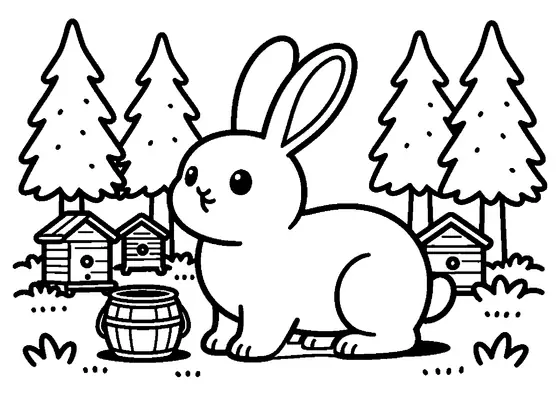
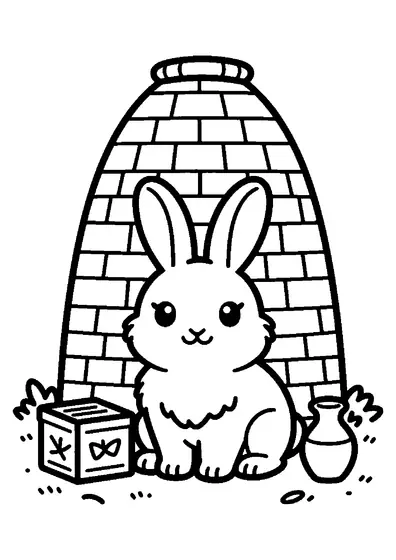
A broad-backed New Zealand rabbit rests on lush grass beside a wooden tub in front of a stone smokehouse.

A4 format (portrait), black outlines on a white background · for home and classroom use
All coloring pages: Bunny Coloring Pages
Similar coloring pages: Bunny Coloring Pages



What else can you print? Free, no account needed
Custom Name Coloring Pages
Enter your child's name to generate a custom coloring page featuring large outline letters to color and decorate.
Open generator →Connect the Dots Generator
Eight connect-the-dots pictures across three difficulty levels. Features faint outline guides for younger children and dots only for older kids.
Open generator →Printables
Worksheets, tracing lines, mazes and dot-to-dots in A4.
Browse printables →
Rustic Atmosphere at the Farmstead Smokehouse
This setting highlights a New Zealand rabbit resting outdoors on a grassy patch. In the background stands a rustic smokehouse built from natural stone, complemented by a sturdy wooden tub nearby.
Facts About the New Zealand Rabbit Breed
Despite its name, the New Zealand rabbit breed originated in California during the early twentieth century. These medium-to-large rabbits are well known for their muscular build, calm temperament, and dense, glossy coat that comes in white, red, black, and broken color variations.
Colors of the Outdoor Farm Scene
- New Zealand rabbit coat: Pure white, deep rusty red, glossy black, or broken brown patterns
- Farmyard grass: Deep emerald green, sage, or muted olive green
- Wooden tub: Warm cedar brown, oak tan, or dark weathered timber
- Stone smokehouse walls: Earthy gray, tan fieldstone, or dark granite