
Macaw in a Palm Grove
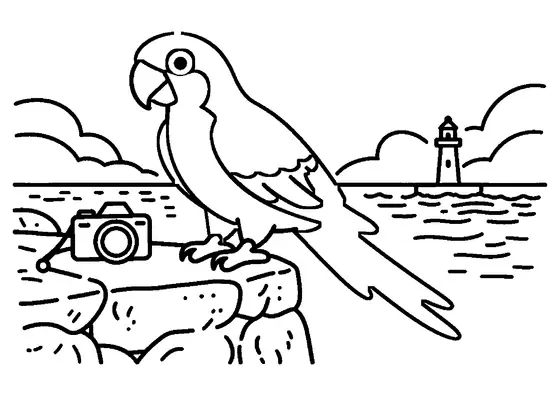
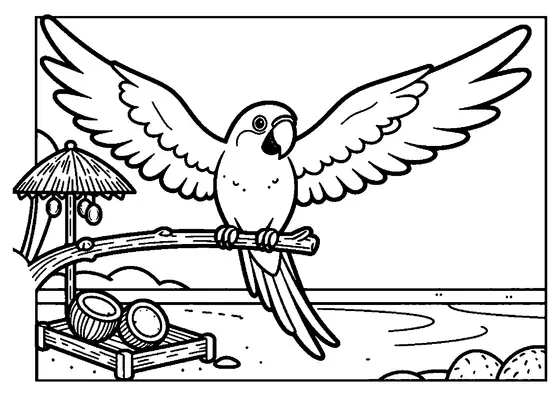
A colorful tropical parrot perches among heavy coconuts and broad palm leaves on a coastal island grove.

A4 format (portrait), black outlines on a white background · for home and classroom use
All coloring pages: Parrot and Flamingo Coloring Pages
Similar coloring pages: Parrot and Flamingo Coloring Pages




What else can you print? Free, no account needed
Custom Name Coloring Pages
Enter your child's name to generate a custom coloring page featuring large outline letters to color and decorate.
Open generator →Connect the Dots Generator
Eight connect-the-dots pictures across three difficulty levels. Features faint outline guides for younger children and dots only for older kids.
Open generator →Printables
Worksheets, tracing lines, mazes and dot-to-dots in A4.
Browse printables →
Tropical Macaws in Coastal Palm Ecosystems
Macaws thrive in seaside palm groves where tall palm tree trunks, broad leaves, and abundant coconuts provide plenty of food and canopy cover. These tropical island environments offer safe perches where large parrots can rest, forage, and socialize away from ground predators.
How Macaws Interact with Palm Fruits
Macaws use their exceptionally strong curved beaks to crack open tough outer shells of tropical nuts and coconuts. Their flexible tongue, containing a small bone, helps them scoop out high-fat nut meat essential for their energy needs.
Natural Colors of Macaws and Tropical Groves
- Macaw wings: brilliant blue and bright yellow
- Palm leaves: deep forest green
- Coconuts: fibrous brown or raw green
- Palm tree trunks: textured gray-brown
- Macaw facial patch: bare white with fine dark lines