
Owl in a Forest Clearing
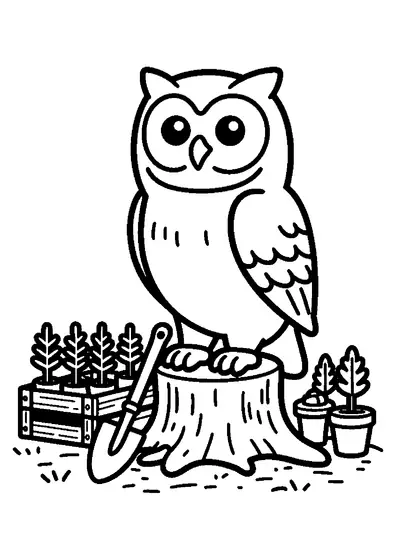
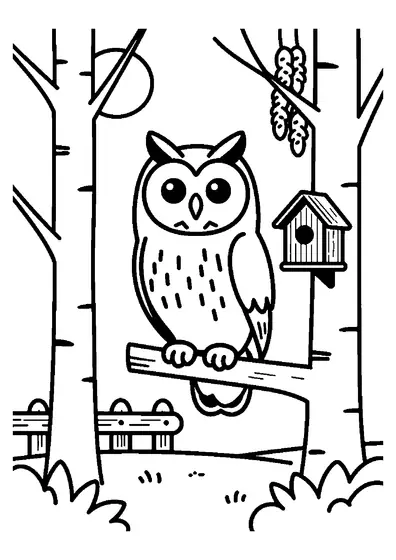
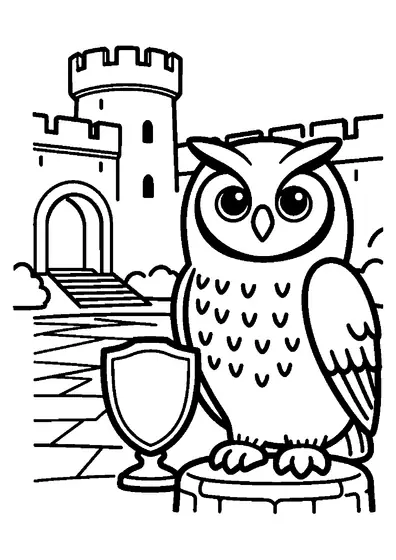
A woodland landscape showcases a large owl perched on an old tree stump beside a fallen pine cone.

A4 format (portrait), black outlines on a white background · for home and classroom use
All coloring pages: Owl Coloring Pages
Similar coloring pages: Owl Coloring Pages



What else can you print? Free, no account needed
Custom Name Coloring Pages
Enter your child's name to generate a custom coloring page featuring large outline letters to color and decorate.
Open generator →Connect the Dots Generator
Eight connect-the-dots pictures across three difficulty levels. Features faint outline guides for younger children and dots only for older kids.
Open generator →Printables
Worksheets, tracing lines, mazes and dot-to-dots in A4.
Browse printables →
A Forest Clearing Featuring a Woodland Owl
This forest view presents a wild owl sitting atop a sturdy tree stump in a natural clearing. Around the central stump, evergreen fir trees and scattered rocks form the backdrop of the quiet forest environment, with a pine cone resting nearby on the ground.
Interesting Knowledge About Woodland Owls
Owls possess specialized feathers with soft, fringed edges that muffle the sound of air passing over their wings. This unique feature enables them to fly almost silently while searching for prey through dense woods. Unlike most birds, owls have forward-facing eyes that provide depth perception, though they must rotate their entire head to look in different directions.
Natural Colors of Owls and Forest Elements
- Owl plumage: Earthy shades of brown, beige, gray, and mottled white
- Owl eyes: Bright yellow, deep orange, or dark brown
- Tree stump and bark: Dark brown, charcoal, or mossy green
- Fir tree needles: Deep green or silvery pine tones
- Pine cone: Medium brown, tan, or woody gray