
Tawny Owl on a Stump at a Tree Nursery
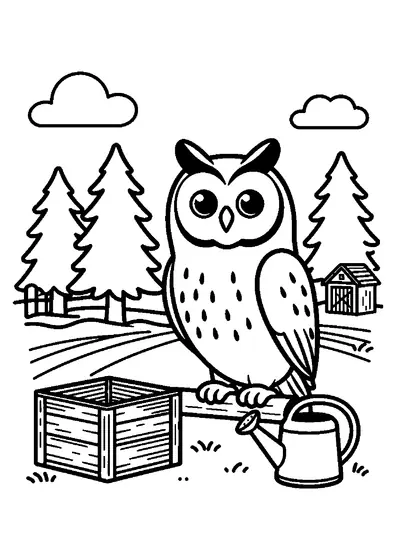
A woodland scene depicts a tawny owl resting at a tree nursery surrounded by young spruce trees.

A4 format (portrait), black outlines on a white background · for home and classroom use
All coloring pages: Owl Coloring Pages
Similar coloring pages: Owl Coloring Pages


What else can you print? Free, no account needed
Custom Name Coloring Pages
Enter your child's name to generate a custom coloring page featuring large outline letters to color and decorate.
Open generator →Connect the Dots Generator
Eight connect-the-dots pictures across three difficulty levels. Features faint outline guides for younger children and dots only for older kids.
Open generator →Printables
Worksheets, tracing lines, mazes and dot-to-dots in A4.
Browse printables →
Tawny Owls in a Tree Nursery
Tree nurseries provide specialized environments where young spruce trees are grown until they are ready for replanting in forests. Tawny owls frequently visit these quiet spaces at night, using elevated vantage points such as tree stumps to monitor the surrounding ground for small rodents.
Natural Pest Control in Forest Nurseries
Tawny owls are highly nocturnal predators that rely on exceptional hearing to locate mice and voles hiding beneath vegetation. In managed tree nurseries, their presence helps control rodent populations that might otherwise gnaw on delicate young seedlings. Unlike many other owl species, tawny owls stay within the same woodland territory throughout their entire adult lives.
Real Colors of Tawny Owls and Spruce Trees
- Tawny owl feathers: Mottled brown, gray, and cream shades that provide camouflage against tree bark
- Tawny owl eyes: Dark brown or black, set within rounded facial disks
- Young spruce trees: Deep green needles with lighter lime-green tips on new shoots
- Tree stump: Weathered grayish-brown wood with light tan inner rings