
Eagle-Owl in an Abandoned Quarry
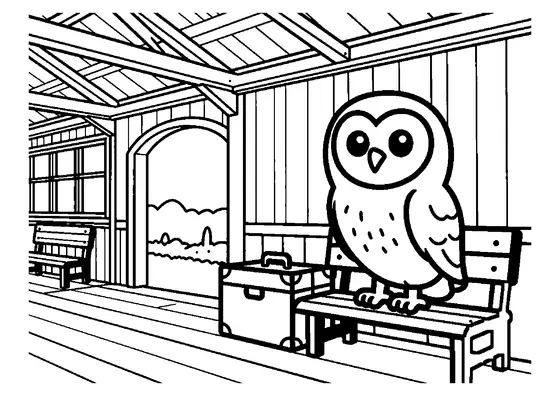
A large eagle-owl stands on a stone block inside a terraced quarry.

A4 format (portrait), black outlines on a white background · for home and classroom use
All coloring pages: Owl Coloring Pages
Similar coloring pages: Owl Coloring Pages



What else can you print? Free, no account needed
Custom Name Coloring Pages
Enter your child's name to generate a custom coloring page featuring large outline letters to color and decorate.
Open generator →Connect the Dots Generator
Eight connect-the-dots pictures across three difficulty levels. Features faint outline guides for younger children and dots only for older kids.
Open generator →Printables
Worksheets, tracing lines, mazes and dot-to-dots in A4.
Browse printables →
The Eurasian Eagle-Owl in an Abandoned Quarry
An eagle-owl stands on a stone block alongside a wheelbarrow and a length of rope. Simple rock terraces form the backdrop of the abandoned quarry.
Quarry Ledges as Cliff Nesting Sites
Eurasian eagle-owls are among the largest owl species in the world, requiring vast hunting territories and secluded cliff ledges. Abandoned stone quarries closely resemble natural mountain cliffs, offering these large raptors elevated roosts far from human activity. The quarry ledges provide excellent vantage points where eagle-owls watch for prey during early dawn and dusk.
Real Colors of a Terraced Quarry Environment
- Eagle-owl feathers: tawny buff mixed with dark brown bars and intense orange eyes
- Carved stone block: raw granite gray or pale limestone tan
- Wheelbarrow: dark weathered timber with rusty iron fittings
- Coiled rope: natural beige hemp fiber
- Rock terraces: layered shades of charcoal gray, brown, and ochre rock