
Barn Owl in an Old Waiting Room
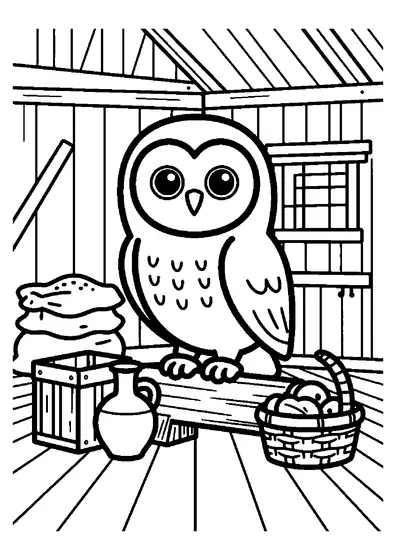
A barn owl sits on a bench inside an old railway waiting room during spring rain.

A4 format (landscape), black outlines on a white background · for home and classroom use
All coloring pages: Owl Coloring Pages
Similar coloring pages: Owl Coloring Pages


What else can you print? Free, no account needed
Custom Name Coloring Pages
Enter your child's name to generate a custom coloring page featuring large outline letters to color and decorate.
Open generator →Connect the Dots Generator
Eight connect-the-dots pictures across three difficulty levels. Features faint outline guides for younger children and dots only for older kids.
Open generator →Printables
Worksheets, tracing lines, mazes and dot-to-dots in A4.
Browse printables →
Barn Owl Sheltering in a Rural Waiting Room
A barn owl has taken shelter inside an old country railway waiting room during spring rain. The indoor environment contains a wooden bench, a trunk, a storage crate, and a wooden floor.
Rural Buildings as Barn Owl Nesting Grounds
Barn owls frequently roost inside rural structures such as wooden barns, grain silos, and abandoned train stations. Their heart-shaped facial disks channel faint sounds directly to their hearing organs, allowing them to detect rodents moving beneath wooden floorboards. Dry indoor spaces protect these pale hunters from heavy rain, which can weigh down their soft feathers.
Real Colors of a Vintage Country Waiting Room
- Barn owl plumage: pure white chest, golden-tan back feathers, and dark eyes
- Wooden bench: warm amber brown or dark varnish
- Wooden floorboards: pale chestnut or natural pine brown
- Vintage trunk: dark walnut timber with tarnished brass latches
- Wooden crate: rustic tan or grayed wood