
Duck in the Reeds by the Water
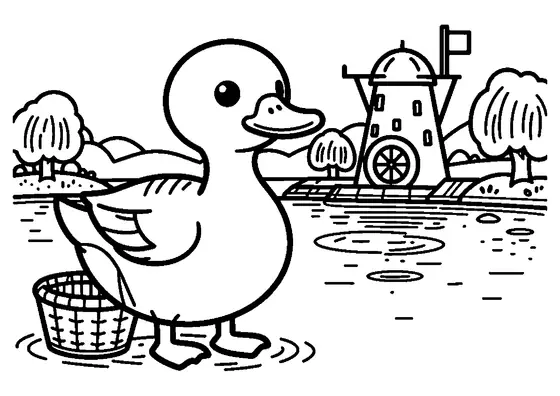
A duck stands in shallow pond water between tall reeds as gentle ripples spread nearby.

A4 format (landscape), black outlines on a white background · for home and classroom use
All coloring pages: Bird Coloring Pages
Similar coloring pages: Bird Coloring Pages




What else can you print? Free, no account needed
Custom Name Coloring Pages
Enter your child's name to generate a custom coloring page featuring large outline letters to color and decorate.
Open generator →Connect the Dots Generator
Eight connect-the-dots pictures across three difficulty levels. Features faint outline guides for younger children and dots only for older kids.
Open generator →Printables
Worksheets, tracing lines, mazes and dot-to-dots in A4.
Browse printables →
What the Duck in the Reeds by the Water page shows
The water bird stands in a shallow pond surrounded by tall grasses and reeds. Circular ripples cross the water near the duck, suggesting a calm surface disturbed by small movements. The vegetation at both sides places the bird in the sheltered edge of a freshwater habitat.
Interesting facts about ducks near reeds
Dense reeds provide ducks with cover from weather and predators, and they can also offer protected places for nesting. Ducks spread oil from a gland near the base of the tail across their feathers while preening. This treatment helps the outer feathers shed water while a softer layer underneath traps insulating air.
Natural colors of the duck and pond
- Duck feathers: white, brown, tan, gray, black, or patterned, depending on the species and sex
- Duck bill: yellow, orange, gray, black, or olive, depending on the species
- Duck feet and legs: commonly orange, yellow, gray, brown, or black
- Reeds and tall grasses: green in active growth, turning straw-yellow or brown when dry
- Pond water: clear but often appearing blue, green, gray, or brown because of reflections and sediment