
Brown Bear on a Rocky Mountain Ledge
A large brown bear stands along a high mountain trail framed by rocky peaks and boulders.
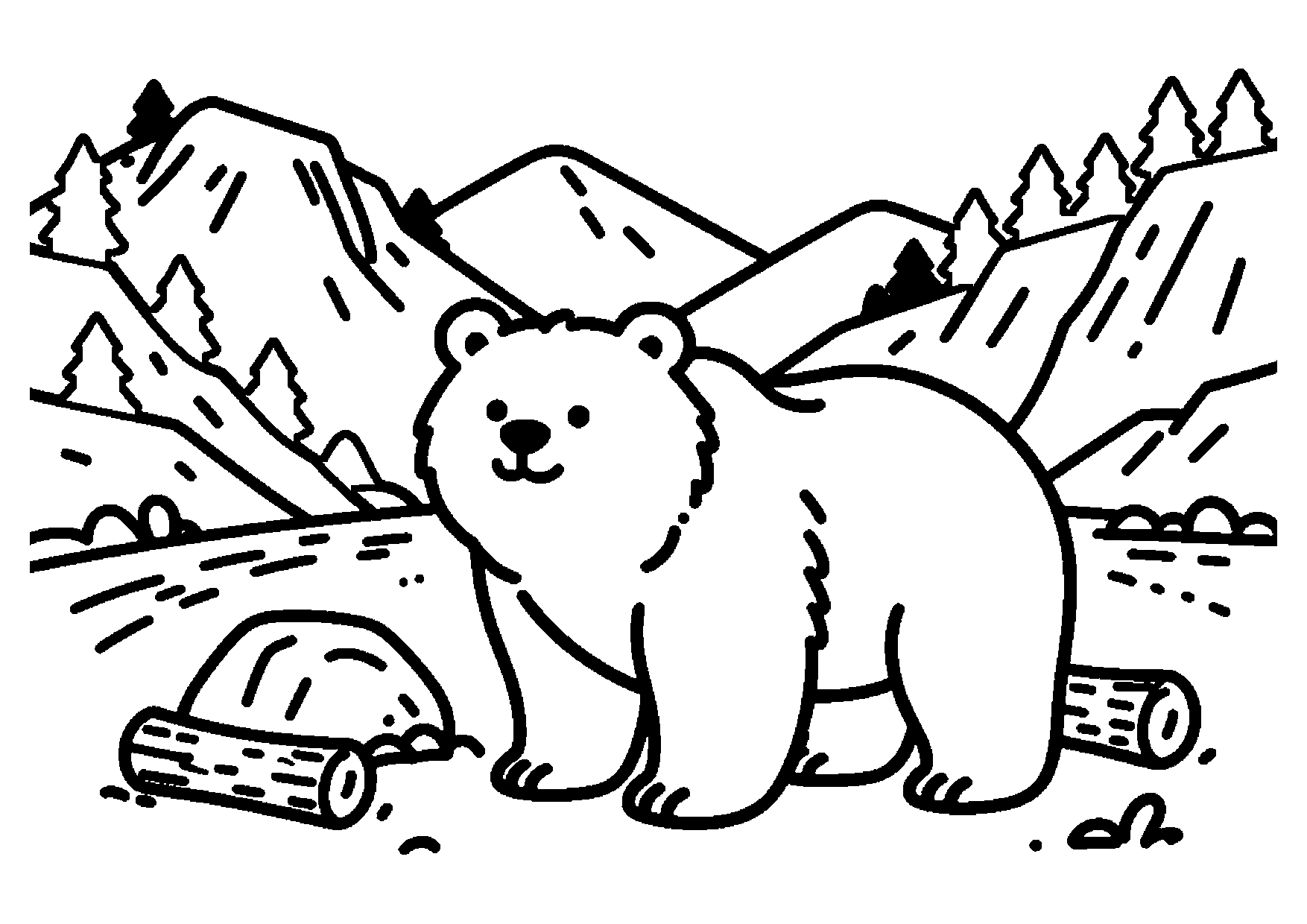
A4 format (landscape), black outlines on a white background · for home and classroom use
All coloring pages: Bear Coloring Pages
Similar coloring pages: Bear Coloring Pages


What else can you print? Free, no account needed
Custom Name Coloring Pages
Enter your child's name to generate a custom coloring page featuring large outline letters to color and decorate.
Open generator →Connect the Dots Generator
Eight connect-the-dots pictures across three difficulty levels. Features faint outline guides for younger children and dots only for older kids.
Open generator →Printables
Worksheets, tracing lines, mazes and dot-to-dots in A4.
Browse printables →
Brown Bear in the Mountain Landscape
Brown bears are adaptable apex predators that often navigate high alpine trails and steep rocky ledges in search of food. Their powerful limbs allow them to traverse rugged terrain with ease, moving between dense forests and open ridges. Mountains provide these large mammals with shelter, fresh water streams, and secluded caves for winter shelter.
Interesting Facts About Mountain Habitats
High mountain environments experience rapid weather changes, forcing resident wildlife to rely on thick fur coats to maintain body heat. Brown bears in rocky regions often dig beneath heavy stones or locate natural caves to build secure winter dens. During late summer, they search alpine slopes for wild berries, roots, and small mammals to store vital energy reserves.
Natural Colors of the Bear and Mountains
- Brown bear fur: rich shades of dark brown, tan, or cinnamon
- Bear snout and paws: light brown with charcoal or dark gray claws
- Mountain rocks and boulders: cool gray, slate, or brownish granite
- Distant alpine peaks: light gray topped with bright white snow patches
- Trail soil: reddish brown or dusty tan earth