
Polar Bear on a Snowy Sea Cliff
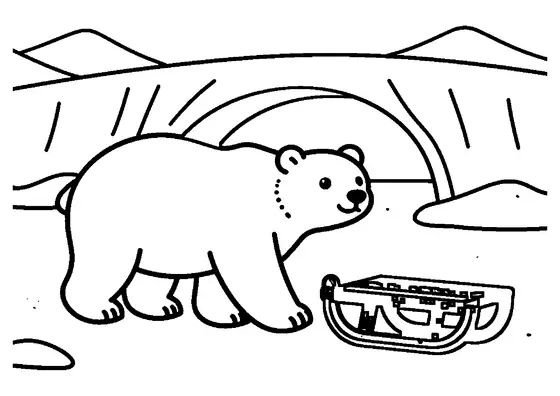
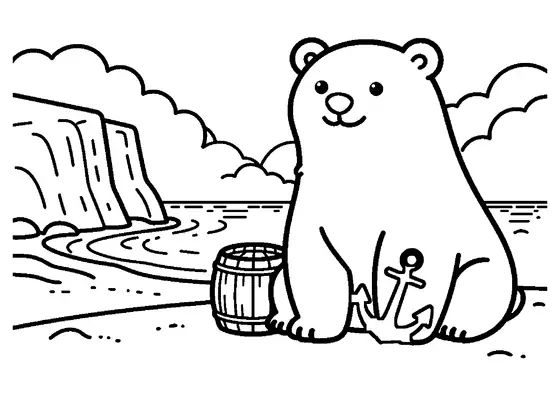
A polar bear looks out across a frozen Arctic bay next to a simple wooden signpost on a cliff.

A4 format (portrait), black outlines on a white background · for home and classroom use
All coloring pages: Bear Coloring Pages
Similar coloring pages: Bear Coloring Pages



What else can you print? Free, no account needed
Custom Name Coloring Pages
Enter your child's name to generate a custom coloring page featuring large outline letters to color and decorate.
Open generator →Connect the Dots Generator
Eight connect-the-dots pictures across three difficulty levels. Features faint outline guides for younger children and dots only for older kids.
Open generator →Printables
Worksheets, tracing lines, mazes and dot-to-dots in A4.
Browse printables →
Polar Bear by the Arctic Bay
Polar bears are the largest land carnivores on Earth, uniquely adapted to survive in extreme Arctic climates. They spend much of their lives on sea ice, navigating coastal cliffs and frozen bays in search of seals. Their massive size and insulating layers enable them to thrive in regions covered by deep snow and subzero winds.
Arctic Coastal Discoveries
Wooden signposts in remote northern settlements often point toward distant polar destinations or research stations across the tundra. Sea cliffs near Arctic bays give animals a clear view over the expanding ice sheets as sea conditions shift with the seasons. Floating sea ice serves as a vital platform for polar wildlife to travel vast distances across cold ocean waters.
Real Colors of Polar Animals and Arctic Scenes
- Polar bear fur: translucent white that appears cream or soft yellow in sunlight
- Polar bear skin and nose: jet black beneath the dense coat of fur
- Wooden signpost: weathered brown, grayed timber, or pale driftwood brown
- Sea cliff rocks: dark charcoal gray or black basalt dusted with white snow
- Frozen Arctic bay: icy light blue, turquoise, or crisp white ice