
Bear in a Shallow Forest Stream
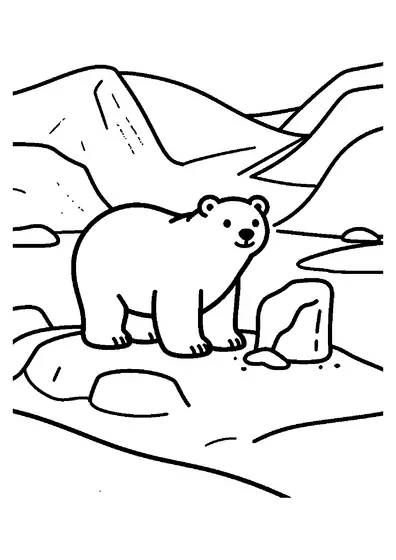
A wild bear moves through shallow river water along a forested bank marked by a large stone and fallen tree branch.

A4 format (landscape), black outlines on a white background · for home and classroom use
All coloring pages: Bear Coloring Pages
Similar coloring pages: Bear Coloring Pages



What else can you print? Free, no account needed
Custom Name Coloring Pages
Enter your child's name to generate a custom coloring page featuring large outline letters to color and decorate.
Open generator →Connect the Dots Generator
Eight connect-the-dots pictures across three difficulty levels. Features faint outline guides for younger children and dots only for older kids.
Open generator →Printables
Worksheets, tracing lines, mazes and dot-to-dots in A4.
Browse printables →
Wild Bear in a Woodland Stream
Forest streams serve as vital habitat zones for wild bears, offering freshwater, fish, and cooling relief during warm weather. A bear wading near a riverbank surrounded by rocks and submerged wood showcases how large mammals navigate freshwater ecosystems. Riparian zones where land meets water host diverse plant life and invertebrate species that support woodland food webs.
How Bears Interact with Forest Rivers
Bears are strong swimmers and regularly enter river currents to catch fish, forage for aquatic roots, or cross between forest territories. During salmon runs, bears gather near shallow river stretches where fish pass, using their sharp claws and strong paws to catch food. Streams also supply clean drinking water necessary for survival in dense forests.
Colors of a Stream Ecosystem
- Wild bear coat: Dark brown, grizzly silver-tipped, or black
- River water surface: Clear blue, reflective sky blue, or rippling teal
- Stream bank rock: Slate gray, dark granite, or brownish-gray stone
- Submerged tree branch: Wet dark brown bark with green algae spots